

Skip to content
Close Menu
ConvictionConviction
  • Home
  • Law & Justice
  • Special Reports
  • Opinion
  • Ask The Expert
  • Get In Touch

Subscribe to Updates

Get the latest creative news from FooBar about art, design and business.

What's Hot

Legal Indaba hears AI will transform legal practice, but lawyers remain accountable

August 29, 2026

Can trustees raise a special levy to cover legal costs owed to a body corporate member?

August 28, 2026

MK Party and UAT lose bid to appeal President Ramaphosa’s impeachment pause

August 28, 2026
Facebook X (Twitter) Instagram
Trending
  • Legal Indaba hears AI will transform legal practice, but lawyers remain accountable
  • Can trustees raise a special levy to cover legal costs owed to a body corporate member?
  • MK Party and UAT lose bid to appeal President Ramaphosa’s impeachment pause
  • Tshiamiso Trust pays R2.53bn to 26,300 mineworkers and dependants, faces tough AGM questions
  • Why Special Tribunal ordered Nkandla architect Minehle Makhanya to repay R147 million
  • Free eye screenings help nearly 200 learners see a brighter future through education
  • Acting magistrate and attorney jailed after repeatedly missing court appearances
  • GOOD caucus promise for permanent municipal job carries no legal weight
Facebook X (Twitter) Instagram
ConvictionConviction
Sonneblom
  • Home
  • Law & Justice
  • Special Reports
  • Opinion
  • Ask The Expert
  • Get In Touch
ConvictionConviction
Home » Legal Indaba 2026
Special Reports

Legal Indaba hears AI will transform legal practice, but lawyers remain accountable

Public Protector CEO Mongezi Menye believes that artificial intelligence has the power to strengthen legal services, but justice will always depend on human ethics, judgment and accountability.
Sindiso NhlabathiBy Sindiso NhlabathiAugust 29, 2026Updated:August 29, 2026No Comments
Facebook Twitter Pinterest LinkedIn WhatsApp Reddit Tumblr Email
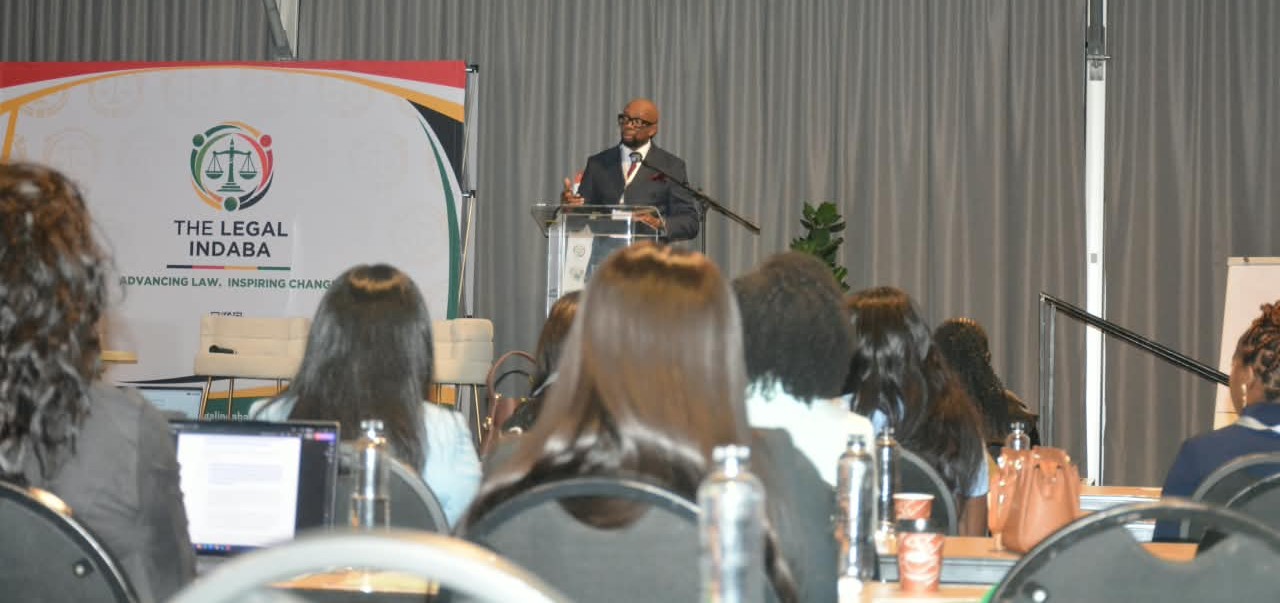
Delegates attend Legal Indaba 2026 in Johannesburg, where the future of South Africa’s legal profession was explored through discussions on artificial intelligence, ethics and accountability.
Share
Facebook Twitter LinkedIn Pinterest Email
  • AI is already transforming legal research, drafting and contract analysis in South Africa.
  • Legal leaders say lawyers are still responsible for checking AI-generated work and using their professional judgment.
  • Mongezi Menye says true ethical leadership is shown by the choices lawyers make when no one is watching.

A lawyer burning the midnight oil to prepare court papers for the next day now has a powerful new assistant. In just seconds, artificial intelligence can search thousands of judgments, analyse contracts and summarise lengthy legal documents.

However, as delegates at Legal Indaba 2026 heard, while this technology may change how law is practised, it can never take on the responsibility that comes with the profession.

The conference brought together legal practitioners, academics and institutional leaders to explore the future of the profession under the theme ‘Advancing Law. Inspiring Change.’ Across discussions on technology, governance and ethics, it was clear that while AI has a place in the legal toolkit, accountability will always rest with people.

AI is already inside the legal profession

A panel including Kume Luvhani, co-founder and director at Vaxowave; Professor Charles Maimela, Executive Dean of the University of Johannesburg Faculty of Law; Dr Nomalanga Mashinini, Senior Lecturer at Wits University; Raphael Segal, Director of Legal Interact; and Candy Musekene, Legal Manager at MTN, discussed how AI is changing legal practice, particularly in research, contract analysis, drafting and document review.

The speakers explained how this technology is taking over repetitive tasks that used to consume much of lawyers’ time. Rather than spending hours manually searching through volumes of legislation and case law, lawyers can now use AI to find relevant authorities, organise information and prepare first drafts much faster.

For clients, this efficiency can mean lower legal costs and quicker access to legal services. Delegates agreed that AI could improve access to justice by reducing the financial and procedural barriers that keep many South Africans from getting legal representation.

Still, the panel stressed that efficiency can never replace sound legal reasoning. Every AI-generated argument, citation and document must be checked by the lawyer responsible for the case.

Technology cannot replace judgment

As AI grows more sophisticated, speakers said the profession’s ethical obligations become even more important.

Lawyers were cautioned not to accept AI outputs without question, especially when legal authorities or facts need to be checked independently. Professional judgment, they said, remains the foundation of good legal practice.

The discussion also raised concerns about bias in AI systems trained mainly on data from outside Africa. Without enough South African legal, constitutional and language context, these systems could produce incomplete or misleading results that do not reflect the country’s legal realities.

Accountability begins when nobody is watching

Earlier, Mongezi Menye, Chief Executive Officer of the Public Protector’s Office, challenged the legal profession to match innovation with integrity.

Menye said the profession’s greatest asset is public trust and warned that misconduct by any individual damages confidence in the justice system as a whole. “The public does not distinguish between one attorney and the profession as a whole,” he told delegates.

He reminded lawyers that accountability, responsiveness and openness are constitutional values that matter beyond government and should guide how every legal professional acts each day. While laws like the Promotion of Access to Information Act and the Promotion of Administrative Justice Act help with transparency, Menye said laws alone cannot rebuild trust.

Instead, he said, institutions are judged by whether they act quickly and decisively when something goes wrong and whether there are real consequences for accountability.

Menye encouraged lawyers to mentor young practitioners, help clients who cannot afford legal services and report unethical conduct without hesitation.

He concluded that the real measure of ethical leadership is not found in public praise, but in the private choices lawyers make when the pressure is highest, the financial reward is significant, and no one else is watching.

Conviction.co.za

Get your news on the go. Click here to follow the Conviction WhatsApp channel.

accountability Artificial Intelligence ethics Legal Indaba 2026 legal profession
Share. Facebook Twitter Pinterest LinkedIn Tumblr Telegram Email
Sindiso Nhlabathi

Political journalist and current affairs reporter with keen insight and a talent for storytelling.

Related Posts

Free eye screenings help nearly 200 learners see a brighter future through education

August 28, 2026

Legal Indaba 2026 brings together South Africa’s top legal minds in Johannesburg

August 27, 2026

The truth about estate gate licence scans that everyone is getting wrong

Sponsor: My Estate LifeAugust 22, 2026
Leave A Reply Cancel Reply

Prove your humanity: 9   +   5   =  

Subscribe to our newsletter:
Top Posts

Making sectional title rules that work: A practical guide

January 17, 2025

Protection order among the consequences of trespassing in an ‘Exclusive Use Area’

December 31, 2024

Between a rock and a foul-smelling place

November 27, 2024

Irregular levy increases, mismanagement, and legal threats in a sectional title scheme

June 2, 2025
Don't Miss
Special Reports
4 Mins Read

Legal Indaba hears AI will transform legal practice, but lawyers remain accountable

By Sindiso NhlabathiAugust 29, 20264 Mins Read

Artificial intelligence is transforming South Africa’s legal profession, but Legal Indaba 2026 heard that ethics, judgment and accountability must remain human. Legal leaders say AI should strengthen justice, not replace the responsibility carried by lawyers.

Can trustees raise a special levy to cover legal costs owed to a body corporate member?

August 28, 2026

MK Party and UAT lose bid to appeal President Ramaphosa’s impeachment pause

August 28, 2026

Tshiamiso Trust pays R2.53bn to 26,300 mineworkers and dependants, faces tough AGM questions

August 28, 2026
Stay In Touch
  • Facebook
  • Twitter
  • WhatsApp
Demo
About Us
About Us

Helping South Africans to navigate the legal landscape; providing accessible legal information; and giving a voice to those seeking justice.

Facebook X (Twitter) YouTube WhatsApp Twitch RSS
Latest posts

Making sectional title rules that work: A practical guide

January 17, 2025

Protection order among the consequences of trespassing in an ‘Exclusive Use Area’

December 31, 2024

Between a rock and a foul-smelling place

November 27, 2024
OUR PICKS

Pretoria court registrar who issued fraudulent court orders struck off legal roll

August 17, 2026

Judges order Free State Premier to decide on Barolong Boo Seleka leadership dispute

August 7, 2026

Eskom ordered to tackle Kusile pollution with urgent 30-day environmental action plan

August 17, 2026
© 2026 Conviction.
  • Home
  • Law & Justice
  • Special Reports
  • Opinion
  • Ask The Expert
  • Get In Touch

Type above and press Enter to search. Press Esc to cancel.

Powered by
►
Necessary cookies enable essential site features like secure log-ins and consent preference adjustments. They do not store personal data.
None
►
Functional cookies support features like content sharing on social media, collecting feedback, and enabling third-party tools.
None
►
Analytical cookies track visitor interactions, providing insights on metrics like visitor count, bounce rate, and traffic sources.
None
►
Advertisement cookies deliver personalized ads based on your previous visits and analyze the effectiveness of ad campaigns.
None
►
Unclassified cookies are cookies that we are in the process of classifying, together with the providers of individual cookies.
None
Powered by