


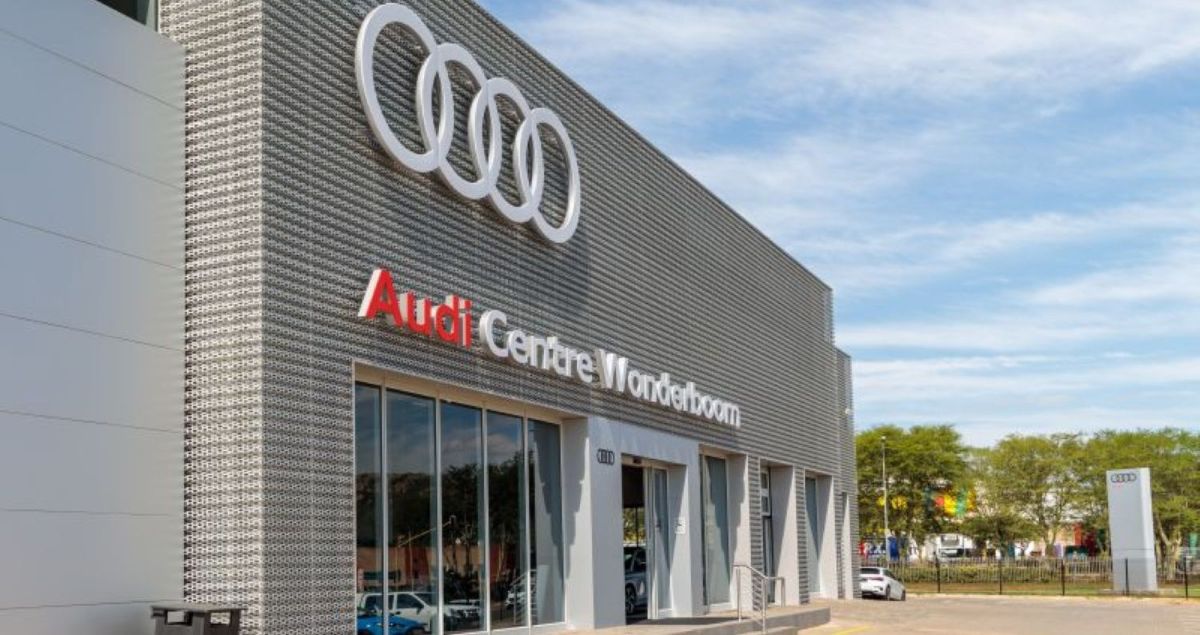
- The National Consumer Tribunal found that the dealership violated the Consumer Protection Act by supplying a vehicle with undisclosed safety-related defects.
- The dealership must refund R683,765, with R10,000 payable to the customer and R647,495 to the vehicle financier MFC.
- The Tribunal imposed a R250,000 administrative fine, citing the dealership’s failure to honour its statutory obligations.
The National Consumer Tribunal has ordered Auto Investments Wonderboom (Pty) Ltd to refund the purchase price of a defective Audi RS5 after finding that the dealership failed to meet its obligations under the Consumer Protection Act.
The judgment followed an application by the National Consumer Commission (NCC) concerning a 2018 Audi RS5 purchased by Thokozani Happy Zulu for R683,765 on 30 April 2024. The purchase was financed through MFC, a division of Nedbank.
The vehicle was delivered on 3 May 2024, but problems emerged almost immediately. Zulu experienced mechanical difficulties while driving home and, within five days, the engine warning light illuminated.
He reported the problems to the dealership and took the vehicle to Audi Centre Trichardt for inspection. On 14 May 2024, the centre issued a repair estimate of R229,555.41, identifying several components requiring attention, including the catalytic converter, brake discs and pads, and shock absorbers.
The customer also raised concerns about the vehicle’s suspension, tyres and other defects that had not been disclosed when he purchased it. The vehicle subsequently failed a roadworthy test.
The dealership initially undertook to collect the vehicle for assessment and repairs but later insisted that Zulu deliver it to its premises at his own risk and expense. On 20 May 2024, its attorneys formally rejected liability, maintaining that the vehicle had been in good condition when delivered.
Zulu requested cancellation of the transaction and a refund, but the dealership refused. He subsequently approached the Motor Industry Ombudsman of South Africa (MIOSA), which recommended that the dealership repair the vehicle.
Following MIOSA’s intervention, the dealership collected the vehicle on 12 August 2024. It later informed Zulu that the vehicle had broken down while being driven towards its premises.
Tribunal finds dealership violated consumer rights
The dealership disputed the allegations, arguing that the Audi Centre document was a repair quotation rather than a technical report establishing material defects. It also maintained that the eventual engine failure resulted from oil starvation and was unrelated to the original complaints.
The tribunal found that the reported instability, cracked brake disc and inspection findings established a safety-related defect. It said a cracked brake disc compromised the safety reasonably expected of a vehicle of that age and mileage.
The panel also found that the defects manifested shortly after delivery and that there was no evidence that Zulu had negligently caused them. It rejected the argument that the vehicle’s second-hand status and mileage excluded the dealership from its obligations under the Consumer Protection Act.
The tribunal distinguished the original defects from the subsequent engine seizure, finding that the evidence did not establish when the oil starvation occurred or what caused it. However, it held that the dealership remained responsible for the independently established defects and its failure to provide the statutory remedy.
The panel further rejected the dealership’s argument that the customer’s decision to have the vehicle inspected by a third party had affected his consumer rights. An independent inspection, it said, did not amount to an alteration of the vehicle.
R683,765 refund and R250,000 fine
The tribunal found that Auto Investments Wonderboom contravened Sections 55(2)(a) to (c), read with section 56(2)(b) of the Consumer Protection Act. The provisions protect consumers’ right to receive goods that are suitable for their intended purpose, of good quality, in good working order and free of defects.
It held that the dealership had failed to honour the customer’s right to an appropriate remedy after the defects were reported within the six-month statutory warranty period.
The dealership was ordered to refund R683,765 within 30 business days of the judgment. The order allocates R10,000 directly to Zulu and R647,495 to MFC, representing the capital amount advanced to finance the purchase.
The tribunal explained that the refund had to be distributed according to the sources of payment to avoid unjustly enriching any party. It also noted that repayment to MFC could extinguish Zulu’s obligations under the financing agreement, depending on its terms.
In addition to the refund, the dealership must pay an administrative fine of R250,000 into the National Revenue Fund within 60 business days.
In determining the penalty, the panel considered the seriousness of the safety-related defect, the financial prejudice suffered by the customer and the dealership’s conduct. It found that the dealership had demonstrated a “conscious disregard for its statutory obligations” and a lack of good faith in its dealings with the customer.
The tribunal dismissed MFC’s jurisdictional objection but made no finding against the financier. There was no order as to costs.
Get your news on the go. Click here to follow the Conviction WhatsApp channel.
