


- The government recorded 38,982 deportations between 1 April and 31 October 2026. Of these, 31,878 were through the Lindela Repatriation Centre.
- Operation Shanela led to 4,370 arrests for breaches of immigration laws between 26 October and 15 November 2026.
- The government has identified ten priority areas. These include asylum registration, immigration enforcement, hijacked buildings, the regulation of spaza shops and stricter controls over identity and SIM-card registration.
South Africa recorded nearly 39,000 deportations and more than 4,300 arrests for immigration offences in seven months as the government moves to tighten immigration enforcement, strengthen asylum controls and close loopholes in the country’s migration management system.
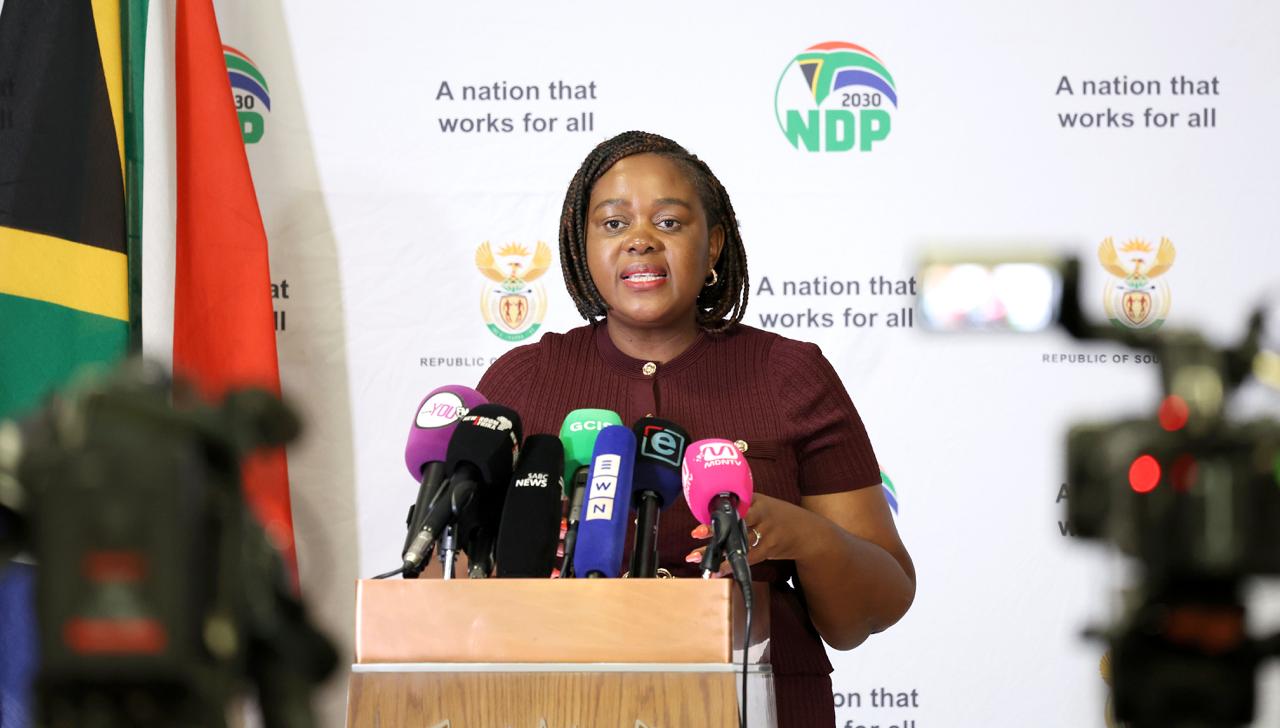
Justice and Constitutional Development Minister Mmamoloko Kubayi, speaking on Thursday, 19 November 2026, in her capacity as Chairperson of the Inter-Ministerial Committee on Migration, outlined progress on the Five-Point Plan announced by President Cyril Ramaphosa on 7 June 2026.
The programme covers 10 priority areas, including asylum administration, immigration enforcement, public order, business regulation and the integrity of government identification systems.
Government awaits outcome of conflicting asylum judgments
The government is monitoring legal proceedings involving asylum seekers, refugees and immigration enforcement, including conflicting judgments before the Gauteng Division. Kubayi said a full bench led by Judge President Aubrey Ledwaba visited the Lindela Repatriation Centre on Wednesday, 18 November, to observe its operations.
In addition, the government plans to approach the Constitutional Court for a supervisory order related to the Scalabrini judgment, but will first wait for the outcome of parallel proceedings in the Gauteng Division. The Departments of Justice and Constitutional Development, Home Affairs, SAPS, the National Prosecuting Authority and the Border Management Authority have all submitted their arguments in these proceedings.
Online asylum registration begins
The Department of Home Affairs launched Phase One of its online asylum-seeker registration system on 10 November 2026, the minister said. The system aims to reduce processing delays, clear backlogs and improve asylum administration. Applicants are still required to attend in-person biometric verification at designated refugee reception centres.
Kubayi emphasised that online registration does not automatically grant refugee status or exempt applicants from South African law. All applications remain subject to verification, screening and adjudication. The government has also started moving Refugee Reception Offices. A temporary facility at Beit Bridge is expected to open on 11 December 2026.
Nearly 39,000 deportations recorded
Of the 38,982 deportations recorded between April and October, 7,104 were carried out through provincial operations and 31,878 through the Lindela Repatriation Centre. The government said it continues to work with law enforcement agencies and foreign missions to identify, document and repatriate foreign nationals.
Operation Shanela resulted in 2,593 arrests for violations of the Immigration Act between 26 October and 8 November, and a further 1,777 between 9 and 15 November. Kubayi said enforcement should be measured not just by arrests but also by the proper completion of immigration processes.
Government targets public disorder and hijacked buildings
The government has prioritised public-order policing to respond to violence, intimidation and attacks against people and businesses. Through the National Joint Operational and Intelligence Structure, police and other security agencies are monitoring threats and coordinating their response.
Kubayi acknowledged that communities are concerned about irregular migration, unemployment, crime and pressure on public services. But she warned these concerns do not justify vigilantism, illegal identity checks or attacks against foreign nationals. She stressed that enforcing immigration laws is the responsibility of the state.
The government has also found around 2,400 non-compliant buildings in metropolitan municipalities. Interventions include developing a funding model for temporary emergency accommodation, prioritising court action involving hijacked buildings and establishing a standard national reporting framework. The Department of Cooperative Governance will lead a phased programme of action covering eight metropolitan municipalities.
Spaza shops and identity systems under scrutiny
Kubayi said the government is tightening regulations for the informal economy, particularly spaza shops and other small businesses. All businesses, regardless of who owns them, must comply with licensing requirements, municipal by-laws, health standards and labour and immigration laws.
The Department of Small Business Development has completed the recruitment of 56 Business Registration Officers who will be deployed across the provinces.
She said the Department of Transport and the Road Traffic Management Corporation are also reviewing the Traffic Register Numbers. The government reported about 850,000 records, with 30,161 duplicates removed, leaving 819,839 records. Of these, 468,592 were active, and 351,247 were dormant.
The review includes better verification through the electronic National Traffic Information System and Home Affairs databases. The government also confirmed that mobile network operators have begun implementing measures to strengthen SIM-card registration compliance under RICA.
SADC prepares regional migration dialogue
The government sees international cooperation as crucial for migration management. It is working with countries such as Malawi, Mozambique, Nigeria, Ghana and the Republic of the Congo, she added.
The 46th Ordinary Summit of SADC Heads of State and Government, held in Durban in August 2026, resolved to convene a Regional Dialogue on Migration Governance in Southern Africa. Preparations are underway for the dialogue, planned for early January 2027. The agenda will cover border management, labour migration, human trafficking, refugee protection and asylum procedures.
Kubayi said the government remains committed to stronger immigration enforcement, secure borders, administrative accountability and respect for constitutional rights and human dignity. She called on South Africans to support lawful immigration management, reject vigilantism and work with authorised law enforcement agencies.
Get your news on the go. Click here to follow the Conviction WhatsApp channel.
