


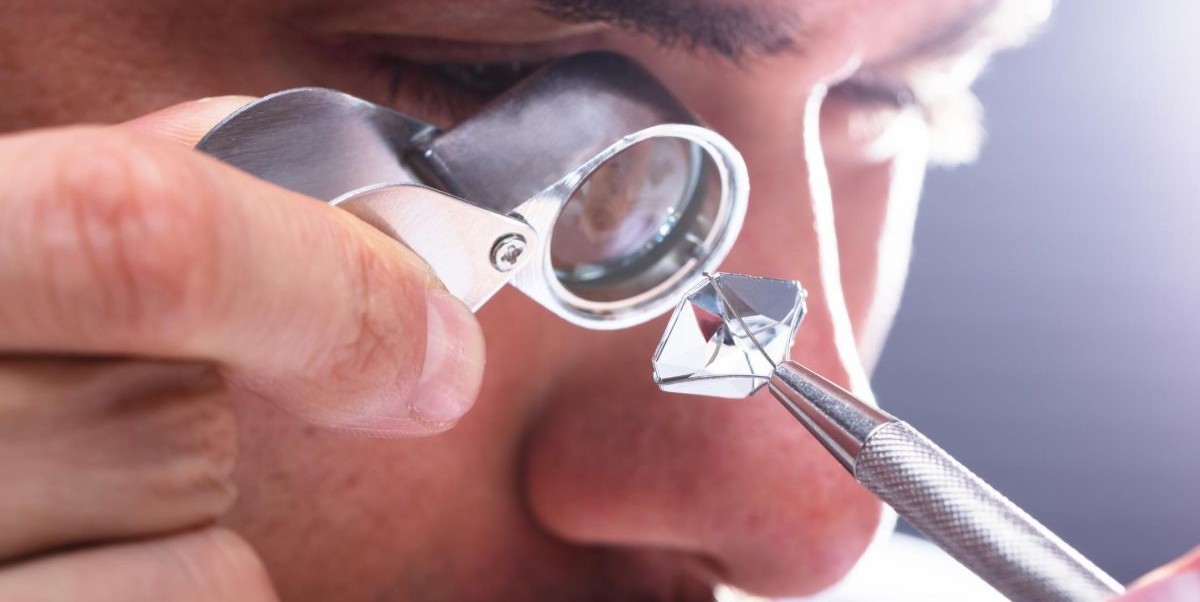
- Angie Spindler took her diamond to a jeweller for removal and certification before selling it.
- The jeweller returned a brown diamond of inferior weight, colour and clarity, claiming it was the original stone.
- Two acting judges upheld an order requiring the jeweller to pay R89,640 and accept the return of the brown diamond.
A dispute over a family heirloom diamond, which the owner delivered to a jeweller for removal and certification, turned into a legal battle when the jeweller returned a lower-grade brown diamond.
Angie Spindler, the diamond’s owner, had previously turned to jeweller and diamond mounter David Graziani to reset and value the stone. In February 2019, she returned the ring to him so that he could remove the stone and send it for certification, as she wanted to sell the diamond.
According to her, the stone she later received in return was materially inferior in weight, colour, and clarity. She said the stone she received back was, in fact, brown and not her original diamond.
Magistrate’s court orders jeweller to pay
Spindler subsequently turned to the Johannesburg Magistrate’s Court, where she sued for the return of her diamond or to be paid for its value. Graziani was ordered to pay her R89,640, the value of the diamond. In terms of that order, she had to return the brown diamond to Graziani once he had paid her the R89,640. Aggrieved by this order, the jeweller turned to the High Court in Johannesburg to appeal it.
According to the evidence, the appellant was to remove the stone and send it to the European Gemological Laboratory (EGL) for certification. The stone remained with the appellant from February 19, 2019, and was only delivered to EGL the following month.
EGL certified the stone it received as 0.9260 ct and brown in colour. Spindler maintained that it was not her stone. The appellant then arranged a second certification at his own cost; the results were similar to those of EGL.
Jeweller’s account contradicted by timeline
Two acting judges who presided over the appeal noted that, between February 19 and March 4, 2019, the appellant told Spindler that the stone was already at the laboratory. That was untrue, as the stone was still in his safe.
It was also noted that on February 28, 2019, he told her that the colour of the stone had changed and that it was of a much lower grade. However, the judges commented that no laboratory had yet seen the stone on that date. Spindler claimed that the jeweller still had the original diamond, which belonged to her, and that he had to deliver it back to her or pay for it.
Appeal judges reject jeweller’s explanation
The judges on appeal found that the magistrate was correct in accepting the version of Spindler, as it was supported by the probabilities in the case. It was noted that the appellant had exclusive possession of the stone before it was handed to EGL, and even before it was sent for certification, he had already told Spindler that the colour and grade had deteriorated.
The court did not accept the appellant’s suggestion that a driver or the laboratory might have substituted the stone. The respondent’s (Spindler) version was simple a white stone went in, a brown stone came back. The magistrate accepted that version and rejected the appellant’s denial. On those findings, the stone was substituted at some point while it was out of the respondent’s hands, the judges said.
It was concluded that the most probable inference was that the appellant had intentionally substituted the diamond with the inferior brown stone and thus deprived her of her ownership of her original diamond.
Jeweller must pay R89,640
In losing his appeal, Graziani will have to pay R89,640 to Spindler, while she has to return the brown diamond, valued at around R17,000, to him.
Get your news on the go. Click here to follow the Conviction WhatsApp channel.
