

Skip to content
Close Menu
ConvictionConviction
  • Home
  • Law & Justice
  • Special Reports
  • Opinion
  • Ask The Expert
  • Get In Touch

Subscribe to Updates

Get the latest creative news from FooBar about art, design and business.

What's Hot

Former pupil takes Rondebosch school to court for alleged sexual abuse by teacher in 1988

November 16, 2026

Madlingozi hopes to advance racial justice by confronting legacies of colonialism and slavery

November 16, 2026

Police needed no forensic proof before arresting Nigerian suspect in staged suicide investigation

November 16, 2026
Facebook X (Twitter) Instagram
Trending
  • Former pupil takes Rondebosch school to court for alleged sexual abuse by teacher in 1988
  • Madlingozi hopes to advance racial justice by confronting legacies of colonialism and slavery
  • Police needed no forensic proof before arresting Nigerian suspect in staged suicide investigation
  • Judge calls magistrate’s remark about rape accused an ‘unfortunate use of English’
  • Employer accommodated Muslim staff but denied religious leave to Jehovah’s Witness
  • Confession of a deadbeat father: Penuel The Black Pen and the war men fight in silence
  • Mother unmasked after using ‘homeschool’ excuse to hide son’s absence
  • A dream you can articulate is a dream you can pursue, writes Gavaza Mongwe
Facebook X (Twitter) Instagram
ConvictionConviction
Sonneblom
  • Home
  • Law & Justice
  • Special Reports
  • Opinion
  • Ask The Expert
  • Get In Touch
ConvictionConviction
Home » Magistrate’s remark about rape accused
Criminal Law

Judge calls magistrate’s remark about rape accused an ‘unfortunate use of English’

The High Court found that the magistrate’s choice of words did not establish bias, despite the accused’s claim that her remark compromised his right to a fair trial.
Kennedy MudzuliBy Kennedy MudzuliNovember 16, 2026Updated:November 16, 2026No Comments
Facebook Twitter Pinterest LinkedIn WhatsApp Reddit Tumblr Email
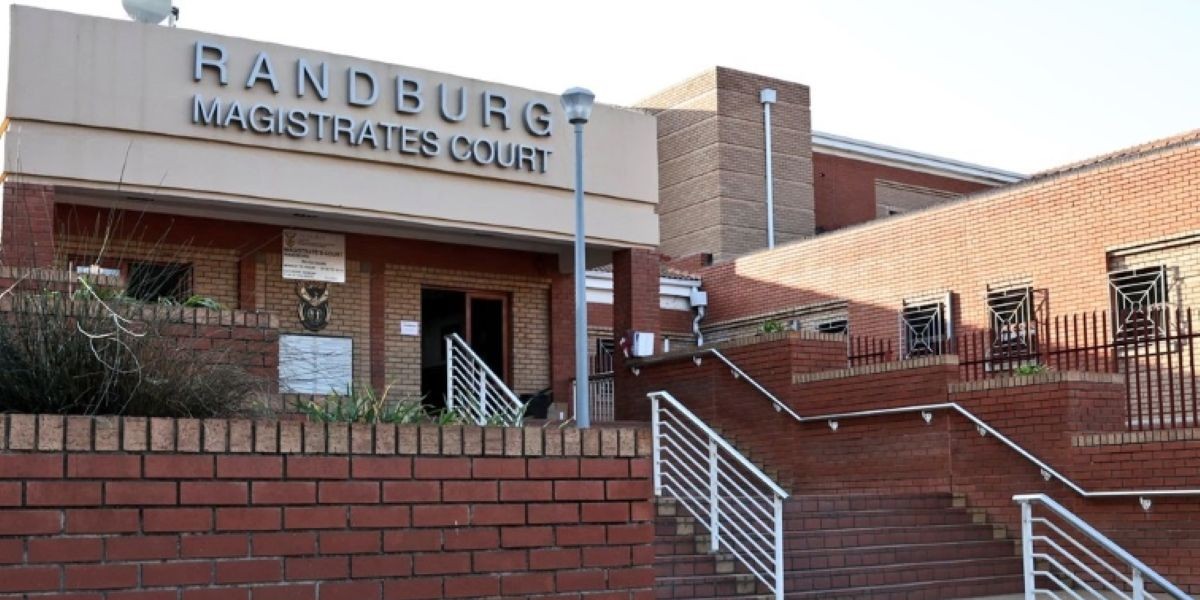
Exterior of Randburg Magistrate’s Court, where a magistrate’s remarks during a bail inquiry prompted a recusal application.
Randburg Magistrate’s Court, where the rape trial involving Obolo Dimitri Nguia is ongoing. Picture: SABC News
Share
Facebook Twitter LinkedIn Pinterest Email
  • A magistrate told the man accused of rape that he could not be trusted when she cancelled and forfeited his bail after he missed a court appearance.
  • The accused argued that the remark demonstrated that the magistrate had already formed an adverse view of his credibility and sought her recusal.
  • The High Court in Johannesburg found that the comment related to the bail inquiry and did not establish that the magistrate had prejudged the rape trial.

A magistrate’s statement that the rape accused could not be trusted led him to ask that she be removed from his ongoing trial. He argued that her view of his credibility made him question whether he would get a fair hearing.

The remark was made during an inquiry into Obolo Dimitri Nguia’s failure to attend court on 8 March 2024 for the continuation of his rape trial at the Randburg Regional Court.

When Nguia subsequently appeared, he produced a medical certificate from Job Shimankana Tabane Hospital in Rustenburg to explain his absence. However, the public prosecutor questioned the authenticity of the document and requested an investigation.

During the inquiry on 14 May 2024, the State presented a letter from the hospital’s administration indicating that Nguia had neither been sick nor received medical treatment at the facility on the day he was expected in court. The letter, provided by a hospital employee, Mr Kgwele, was used to challenge the authenticity of the medical certificate. Kgwele was not called to testify.

The magistrate rejected Nguia’s explanation and ordered the final forfeiture of his bail to the State. In her ruling, she remarked, “The accused at this present time cannot be trusted. Therefore, the bail is finally cancelled and forfeited to the State.”

Accused questions magistrate’s impartiality

Following the remark, Nguia applied for the magistrate’s recusal from the main rape trial. He argued that her assessment of his credibility during the bail inquiry demonstrated that she had formed an adverse opinion of him, raising concerns about whether she could approach the remaining proceedings with an open mind.

The magistrate refused to recuse herself, prompting Nguia to approach the High Court in Johannesburg for a review and an order directing that his criminal trial continue before another magistrate.

The State opposed the application, arguing that the accused had subsequently brought a fresh bail application, which was dismissed by a different presiding officer. It maintained that any challenge to the refusal of bail should have been pursued through an appeal under Section 65 of the Criminal Procedure Act.

High Court examines the magistrate’s words

In a judgment delivered on 13 November 2026, Judge D Dosio, with Acting Judge WA Karam concurring, considered whether the magistrate’s statement established a reasonable apprehension of bias. The judges explained that the test for recusal is objective. The question is whether a reasonable, informed and impartial person would reasonably apprehend that the judicial officer would not bring an impartial mind to the case.

The judgment emphasised that an application for recusal cannot be based on speculation. There must be reasonable grounds to demonstrate that the presiding officer would not be able to adjudicate the matter fairly. The court found that the magistrate’s remark had to be understood in the context of the Section 67 inquiry into Nguia’s failure to attend court, rather than as a finding about his guilt or innocence in the main rape trial.

Judge Dosio described the magistrate’s choice of words as an “unfortunate use of the English language” but found that they did not demonstrate that she had prejudged the criminal proceedings. The judgment also considered the circumstances surrounding the accused’s failure to attend court. Nguia had missed court on four occasions, and the medical certificate he submitted appeared to be fraudulent.

The court noted that he had been legally represented during the bail inquiry and could have challenged the hospital evidence by calling the relevant personnel or the doctor who allegedly issued the certificate.

Delayed rape trial also considered

The judges further considered the impact of the prolonged proceedings on the complainant. She was 14 years old when the alleged rape occurred and was now 18. She was living in a shelter and had yet to complete her evidence. The State still had to call the doctor as its remaining witness.

The court referred to the principle established in Wahlhaus and Others v Additional Magistrate, Johannesburg and Another, which cautions against intervening in criminal proceedings that have not been concluded, except in exceptional circumstances where grave injustice might otherwise result or justice could not be achieved through other means.

The judges found that Nguia had not demonstrated such circumstances or shown that the magistrate had made biased remarks during the main trial. The High Court dismissed the application for the magistrate’s recusal, as well as the review application relating to the cancellation and forfeiture of his bail.

Conviction.co.za

Get your news on the go. Click here to follow the Conviction WhatsApp channel.

Bail forfeiture Criminal proceedings judicial impartiality Magistrate recusal Rape trial
Share. Facebook Twitter Pinterest LinkedIn Tumblr Telegram Email
Kennedy Mudzuli

Multiple award-winner with passion for news and training young journalists. Founder and editor of Conviction.co.za

Related Posts

Police needed no forensic proof before arresting Nigerian suspect in staged suicide investigation

November 16, 2026

Educational specialist who assaulted wife in decorative mat dispute will remain in jail

November 13, 2026

Bank account ownership alone did not prove guilt in R709 000 email fraud

November 12, 2026
Leave A Reply Cancel Reply

Prove your humanity: 8   +   5   =  

Subscribe to our newsletter:
Top Posts

Your driving licence at the gate: What estates can actually legally scan

Sponsor: My Estate LifeSeptember 6, 2026

Making sectional title rules that work: A practical guide

January 17, 2025

Protection order among the consequences of trespassing in an ‘Exclusive Use Area’

December 31, 2024

Between a rock and a foul-smelling place

November 27, 2024
Don't Miss
Civil Law
6 Mins Read

Former pupil takes Rondebosch school to court for alleged sexual abuse by teacher in 1988

By Kennedy MudzuliNovember 16, 20266 Mins Read

A former pupil alleges that a Rondebosch Boys’ Preparatory School teacher sexually and physically abused him in 1988. The school has failed to have the damages claim against it dismissed.

Madlingozi hopes to advance racial justice by confronting legacies of colonialism and slavery

November 16, 2026

Police needed no forensic proof before arresting Nigerian suspect in staged suicide investigation

November 16, 2026

Judge calls magistrate’s remark about rape accused an ‘unfortunate use of English’

November 16, 2026
Stay In Touch
  • Facebook
  • Twitter
  • WhatsApp
Demo
About Us
About Us

Helping South Africans to navigate the legal landscape; providing accessible legal information; and giving a voice to those seeking justice.

Facebook X (Twitter) YouTube WhatsApp Twitch RSS
Latest posts

Your driving licence at the gate: What estates can actually legally scan

Sponsor: My Estate LifeSeptember 6, 2026

Making sectional title rules that work: A practical guide

January 17, 2025

Protection order among the consequences of trespassing in an ‘Exclusive Use Area’

December 31, 2024
OUR PICKS

Two employees dismissed for secretly recording a workplace meeting via cellphone

November 9, 2026

UNISA secures interim interdict against ‘Lawyers from Unisa be like’ social media videos

November 14, 2026

Emmanuel Assemblies church founders ordered to surrender offices amid takeover

November 6, 2026
© 2026 Conviction.
  • Home
  • Buy Now
  • Law & Justice

Type above and press Enter to search. Press Esc to cancel.

Powered by
Necessary cookies enable essential site features like secure log-ins and consent preference adjustments. They do not store personal data.
None
Functional cookies support features like content sharing on social media, collecting feedback, and enabling third-party tools.
None
Analytical cookies track visitor interactions, providing insights on metrics like visitor count, bounce rate, and traffic sources.
None
Advertisement cookies deliver personalized ads based on your previous visits and analyze the effectiveness of ad campaigns.
None
Unclassified cookies are cookies that we are in the process of classifying, together with the providers of individual cookies.
None
Powered by