


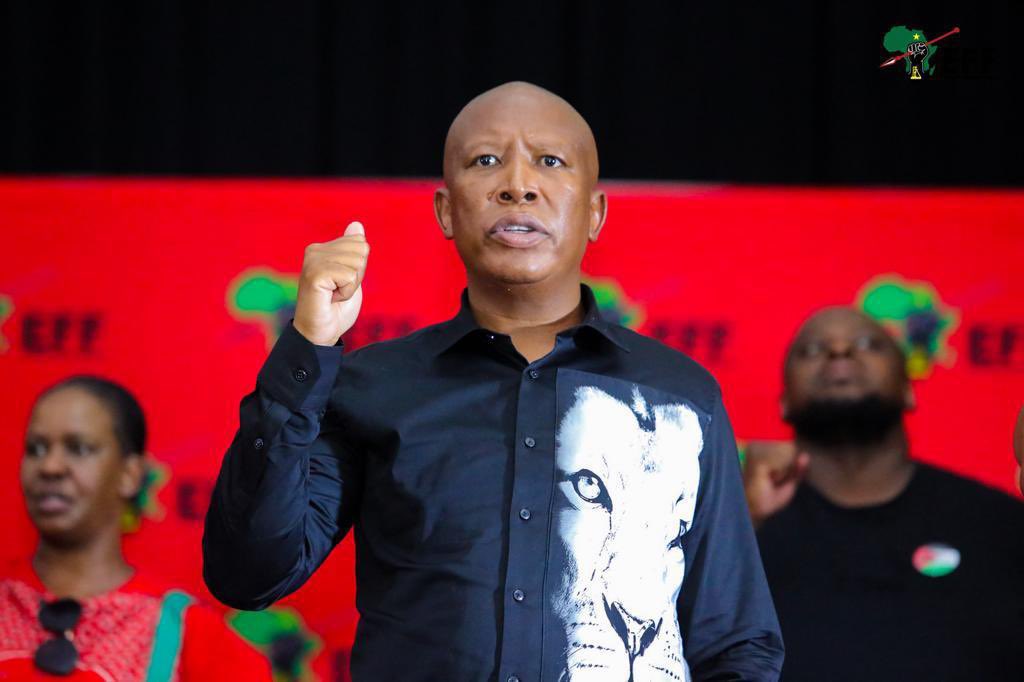
- Malema wants Kunene’s statements that he was involved in the illegal trading of cigarettes and cocaine to be declared both unlawful and defamatory.
- Kunene says his comments were political criticism and is relying on the fair comment defence and the fact that there was no intention to defame.
- The judge has referred the whole of the matter (including Malema’s claim for damages) to trial for evidence and cross-examination.
Behind Julius Malema’s defamation action against PA deputy president Kenny Kunene are allegations involving businessman Adriano Mazzotti, illegal cigarette trading, cocaine and Malema’s alleged financial dealings with Mazzotti. It all started with comments made at a political rally in Cape Town in May 2024 and has now escalated into a full-blown legal battle which will require a trial.
In a judgment of 25 November 2026, Judge WJ du Plessis of the High Court in Johannesburg held that the competing versions could not be resolved by affidavits. Kunene had presented sufficient factual basis for his defences to warrant a trial, though the judge made no finding as to the truth of the allegations against Malema.
The allegations that triggered the legal battle
The issue arises out of two statements Kunene made at a PAC rally at Athlone Stadium in Cape Town on 11 May 2024, just prior to the national and provincial elections.
Kunene told the gathering “Malema works for Mazzotti. He sells the illegal cigarettes for Mazzotti.” He also said, “The Nigerians give him the cocaine”. Part of that speech was subsequently published by Central News on X.
Malema, the EFF leader and MP, said the statements were pure false accusations of criminal and improper conduct. He said they portrayed him as being involved in illegal cigarette trading and in the receipt and use of cocaine. He then went on to demand that Kunene issue a retraction and an apology, which of course neither did.
Although Malema had originally sought a retraction and an apology through his application, the relief granted at the hearing was simply a declaration that the statements were unlawful and defamatory, together with costs. The claim for damages was the second limb of the proceedings.
Kunene’s account of the Mazzotti relationship
A large part of Kunene’s defence is to do with the nature of the alleged relationship between Malema and Mazzotti. Kunene went on to dispute the implication that his statement that Malema was working for Mazzotti was in any way a statement that Malema was actually employed by Mazzotti or that they were trading cigarettes.
Instead he said it was figurative political criticism, that Malema was effectively Mazzotti’s man and that he was serving Mazzotti’s interests.
To support that argument Kunene referred to an alleged contribution to the registration of the EFF, a loan and the occupation of Mazzotti’s property by members of Malema’s family.
Kunene said that the comments were factually grounded in the criticisms and were in the nature of fair comment. They were comments on matters of public interest which were based on information already in the public domain.
Malema completely rejected that interpretation, insisting the statements were not an expression of political opinion but were in fact accusations of criminal behaviour.
The cocaine allegation and the Sandton apartment
The second statement raised yet another dispute regarding allegations of cocaine use and the events that transpired at an apartment in Sandton.
Kunene was relying on the reports as to events at the apartment and the powder which he said was cocaine to support his comments. He did however accept that the material attached to his affidavits did not support his specific contention that the Nigerians had given Malema the cocaine.
Despite that gap Kunene insisted he genuinely believed he was entitled to make the statements as political criticism.
Malema said Kunene had not provided a sufficient factual basis for his allegations and that the allegations were false. He also said Kunene had no basis on which to believe that the remarks were lawful.
Why the judge refused to decide the dispute on affidavits
Judge Du Plessis had to decide whether Malema could get a final declaration that the statements were unlawful and defamatory by way of application proceedings without the parties having to give oral evidence first.
The judge went on to say that defamation actions are normally brought by way of action, particularly where damages are claimed. Declaratory relief can of course be granted by way of motion proceedings in the right circumstances but the applicant would have to meet a very high threshold where the respondent has put up a defence backed by factual material.
Having regard to the earlier decisions, Economic Freedom Fighters v Manuel; Tau v Mashaba; NBC Holdings v Akani Retirement Fund Administrators, Judge du Plessis was of the view that Kunene had established sufficient factual basis for the various defences which could not be dismissed on the papers.
The judge was of the view that Kunene had established a factual basis for fair comment in respect of the first statement. He also accepted that Kunene had established a factual basis for his argument that he had no intention of injuring Malema’s reputation in either of the statements.
However the judge was very clear that establishing a factual basis for a defence was different from proving that the defence would in fact succeed. The latter would of course require evidence and cross examination.
The late affidavits and costs
The judgment also considered Kunene’s answering affidavit which had been filed some six months late. Kunene explained that he had not instructed his lawyers to file it as Malema had taken no further action in relation to the application and it was therefore his belief that the matter was no longer being pursued.
Malema was against the condonation, felt the explanation was inadequate and that the continued publication of the statements was causing ongoing damage to his reputation.
Although Judge Du Plessis found Kunene’s explanation unconvincing in the extreme, he did not find that Malema had suffered such prejudice as to be irreparable. Malema had submitted a very full replying affidavit and all the papers were before the Court. The judge did take into account the significance of the dispute and the prospects of success of Kunene’s defences in coming to the conclusion that condonation in the interests of justice was appropriate.
Kunene was also given permission to file a supplementary answering affidavit which would contain extracts from Jacques Pauw’s book Our Poisoned Land and details of the publisher’s response to the objections to the book. The judge found that the supplementary affidavit merely added to the material already contained in Kunene’s original answering affidavit. Its admission in no way amounted to an acceptance of the truth of the allegations in the book.
Kunene was ordered to pay the costs which had been wasted as a result of the late submission of the supplementary affidavit. The two preliminary objections as to jurisdiction and the non-joinder of the Patriotic Alliance were not raised at the hearing and so were not decided.
Why the damages claim must also go to trial
Another major point of the judgment is Malema’s claim for damages. The judge found that Malema could not get a final declaration by way of motion and then go on to claim damages at a later stage.
The evidence as to the statements, their publication, the circumstances in which they were made and the damage to Malema’s reputation would be relevant to both liability and damages. The judge accordingly directed that the two parts of the application proceed together.
The factual disputes go well beyond the meaning of the statements. They include Malema’s financial dealings with Mazzotti, the Sandton apartment incident, Kunene’s state of mind at the time of the comments and the alleged damage to Malema’s reputation. That would all require discovery, subpoenas and potentially evidence from witnesses other than the two politicians.
What happens next?
Judge Du Plessis referred the whole application (including Parts A and B) to trial in terms of Uniform Rule 6(5)(g). The notice of motion will stand as a simple summons and Kunene’s notice of intention to oppose will stand as a notice of intention to defend.
Malema must make a declaration within 20 days of the order and thereafter the Uniform Rules of Court (as they apply to action proceedings) will apply.
The judge did make it clear that nothing in the judgment establishes that Malema sells illegal cigarettes, that he receives cocaine or that he uses cocaine. The judgment also makes no finding as to whether the publications relied on by Kunene were in fact true or false.
The trial will have to resolve the factual disputes, assess Kunene’s defences and consider Malema’s claim for damages. The onus of proving the defences will remain with Kunene.
The judgment came after the hearing on 7 September 2026.
Get your news on the go. Click here to follow the Conviction WhatsApp channel.
