


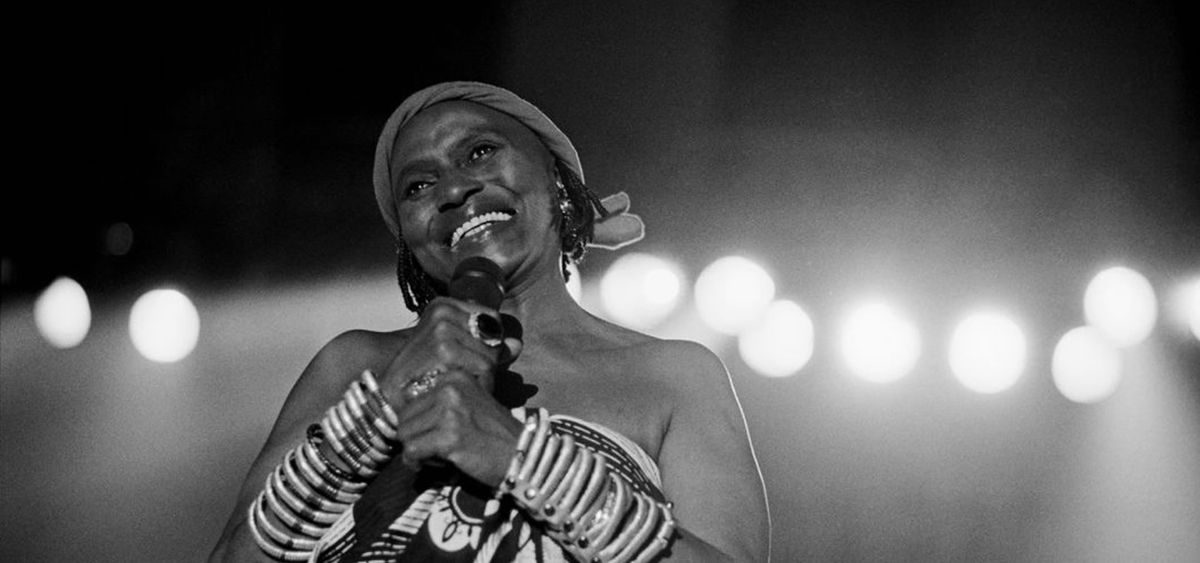
- Miriam Makeba spent 31 years in exile, using her music and international platform to challenge apartheid and advocate for the voiceless.
- Despite her contributions to South Africa’s liberation struggle and cultural heritage, national celebrations overlooked her, and institutions gave little support to her social projects.
- Her absence from Heroes Acre raises questions about how South Africa recognises its cultural icons and remembers those who challenged the establishment.
A visit to Westpark Cemetery soon shows you that Miriam Makeba’s grave and tombstone are conspicuously absent from Heroes Acre, where South African political and cultural legends and icons lie buried.
Go to Heroes Acre, if it ever becomes a proper Heroes Acre. You will find the names. You will not find her. The greatest African woman singer of the 20th century is not there. Mama Africa is not at home among heroes. A home among heroes?
That absence is not an accident. It is a statement. It is the story of South Africa and its prophets. While alive, she did not want to be given a state funeral. Worse, she advised her family to cremate her and spread the ashes in the ocean.
What a self-effacing gesture. No egos. Dust to dust. Ashes to the ocean. To dissolve and be food for the fish and sea plants. To be water that is life. Think about that. In a country where everyone wants a giant funeral, a giant tombstone, a street named after them, a tender for their funeral, Makeba said, burn me. Throw me in the sea. Let me disappear. Let me become water.
That is not depression. That is prophecy. That is a woman who understood that the nation that exiled her, that banned her, that made her a stateless person for 31 years, might also bury her badly. She was right. Makeba was never really welcomed back to her country.
Exile and activism
This is despite everything she did as a cultural activist and ambassador. Let us remember what this country conveniently forgets. She left in 1960 after Sharpeville, after singing at the premiere of Come Back Africa. She was not allowed back to bury her mother.
Her music was banned. Her citizenship was revoked. She became a citizen of the world because her own country said she was not a citizen. She did not go to become a star. She went to become a voice. In 1963, she stood before the United Nations Special Committee Against Apartheid.
She was a cultural diplomat for Guinea-Conakry because South Africa had thrown her away, and Guinea’s Sekou Toure said, “You are my daughter. Africa’s daughter. She told the UN, “I ask you and all the leaders of the world, would you act differently? Would you keep silent and do nothing if you were in our place? Would you not resist if you were allowed no rights in your own country because the colour of your skin is different from the colour of the rulers?”
She said that in 1963. No social media. No PR team. A black woman from Prospect Township, standing before the world, accusing the most powerful apartheid state, knowing she could never go home. That is what a prophet does.
She sang Pata Pata and the world danced, but she used the dancing to tell them about Soweto. She married Stokely Carmichael and America blacklisted her. She lost her American career, her tours, her house, because she married a Black Power man. She did not complain. She went to Guinea and built a life. And then 1990 came. Mandela was free. Exiles returned. What did we do with Makeba?
Overlooked at homecomings
For example, she was never featured as a headline act at the inauguration of any president in this country, including Nelson Mandela or Thabo Mbeki. Nor was she an invited VVIP guest.
Check the footage. April 27, 1994, Union Buildings. Who sang? Who was VVIP? The international celebrities. The Hollywood friends. Makeba was there, maybe somewhere in the crowd, but not the headline. Not central. The woman who had kept South Africa’s name alive for 30 years when the ANC was banned and invisible was not the headline act at the freedom she sang into existence.
Over the years, she again was not featured at the celebration of Freedom Day, Women’s Day or any national day. It is only now that we host a memorial concert or lecture here and there.
Freedom Day comes every year. Who headlines? A young pop star who samples Makeba. Women’s Day comes. Who headlines? Politicians’ wives. Who remembers Makeba on Women’s Day? No one. Yet she was the first African woman to win a Grammy in 1965. The first African woman to show that a Black woman’s voice could fill Carnegie Hall.
Building a legacy beyond music
In her own way, she proved to be resilient and forward-looking. She initiated a project to build a home for abused women and children. However, the state did not deem it fit to support her.
She went to the Department of Arts and Culture, to the Department of Women, with a proposal. A home. Not a recording studio for herself. A home for abused women and children in Gauteng. She knew abuse. She had lived through abusive marriages. She had seen women broken by patriarchy. She wanted to build a house, not a monument.
The state said there was no budget. There was always budget for indabas, for summits, for conferences about women, but no budget for Makeba’s house for women. So she kept singing. At the advanced age of 76 – she was 76, not 92- she carried 350 years of pain; she was still mounting performance stages to create consciousness about the ills that humanity faces.
Her last performance was in Italy, Castel Volturno, near Naples, in 2008. She was using music and live performances to create awareness about gangsterism and drug cartels, about the Camorra that was killing African immigrants, about racism in Italy. She sang for 30 minutes against the mafia. Then she collapsed. Heart attack. Backstage. She died as she lived, on stage, fighting for the voiceless.
This was the continuation of her ambassadorial role. She first caught the international limelight when she addressed the UN as a cultural diplomat for Guinea-Conakry. From Guinea to Italy. From apartheid to Camorra. The same thread. She sang for the people who had no voice.
Songs of protest and memory
This year marks the 50th anniversary of the 1976 student upheavals. As the year draws to an end, we hear the lyrical lament of Soweto Blues that she performed with Hugh Masekela. Children were flying bullets, dying and bleeding.
Who sang it better than Makeba? No one. Masekela wrote it. Makeba cried it. When she sang Soweto Blues after 1976, the world could not ignore June 16. The song was banned here, but it was a hit in every capital of the world.
That song did more for sanctions than a hundred ANC pamphlets. Than the much-vaunted Cultural Boycott. And yet, much as she is not quite remembered nor celebrated in her own country, her spirit will rise.
How does South Africa remember her? A street in Newtown? A small museum, wherever that is, always closed? A Google Doodle once a year? We have named airports after men who never left the country. We have named domes after men who never sang. But Makeba, who carried this country’s soul for three decades, is a footnote.
We like heroes who are dead and quiet. Makeba was dead but not quiet. She said, “Do not give me a state funeral. Do not put me in Heroes Acre. Cremate me. Give me to the ocean. Because the ocean does not forget. The ocean took the slaves from Mozambique Island; it took the exiles from Dar es Salaam; it takes everything and keeps moving.
The ocean accepted her. Her family did not fully cremate and scatter her ashes. She is buried in Guinea for now, with some ashes scattered, but her wish tells you everything. She did not want to be owned by a state that never owned her.
The forgotten prophet is not forgotten because we have bad memory. She is forgotten because to remember her properly would indict us.
To remember Makeba properly, we would have to admit:
- That we prefer celebrity over consciousness.
- We are big on memorial lectures and gala dinners.
- That we welcome home those who praise us, not those who challenge us.
- That we have never built Heroes Acre because we do not know who a hero is. Is it the man who died with a gun, or the woman who lived with a song that was more powerful than a gun?
- We did not support her home for abused women because we still do not support abused women; we only talk about them on Women’s Day.
Makeba’s grave is absent from Heroes Acre. But her voice is present in every protest song. Her ashes are in the ocean, and the ocean surrounds us. She dissolved to become food for fish and sea plants, as she wanted. That is more revolutionary than any marble tombstone in Pretoria.
When you hear the waves in Durban, in Cape Town, in Port Elizabeth, that is Makeba. She went back to the water, where we all come from. The prophets are never welcomed in their hometown. Jesus said that. Makeba lived it.
Her spirit will rise. Not because we will build her a statue, though we should, but because the young girls who are now 16, the age of the 1976 students, will find her on TikTok, on vinyl at MM in Randburg, in a shebeen where real DJs play Miles, and they will ask who this woman is who refused a state funeral and asked to be fish food.
And in that question, she will rise again.
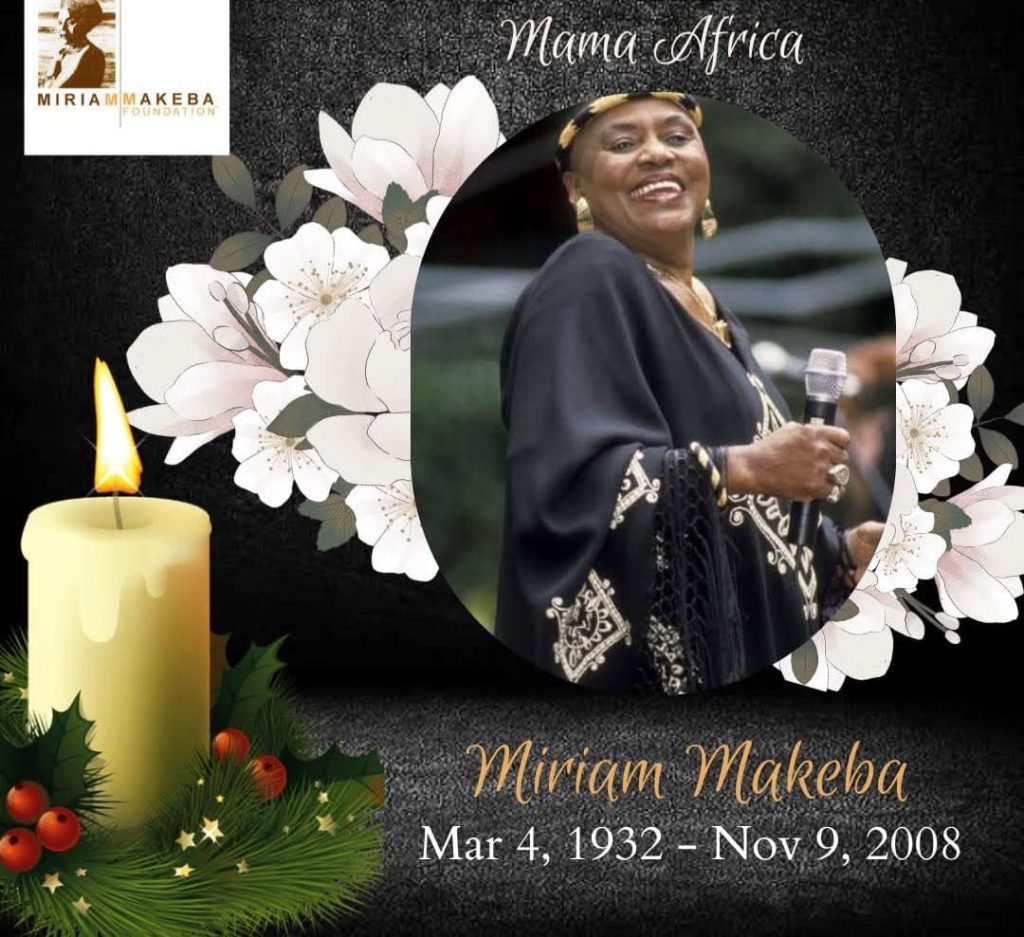
Get your news on the go. Click here to follow the Conviction WhatsApp channel.
The opinions expressed in this article are solely those of the author and do not necessarily reflect the views of Conviction.co.za
