


- Interest lawfully charged on municipal service fees and property rates is included in the amounts payable under Section 118(1) of the Municipal Systems Act.
- The two-year limit applies to qualifying municipal debts and any interest charged on them.
- Municipalities cannot demand interest they were not legally entitled to charge, nor can they make new owners personally liable for a previous owner’s debts.
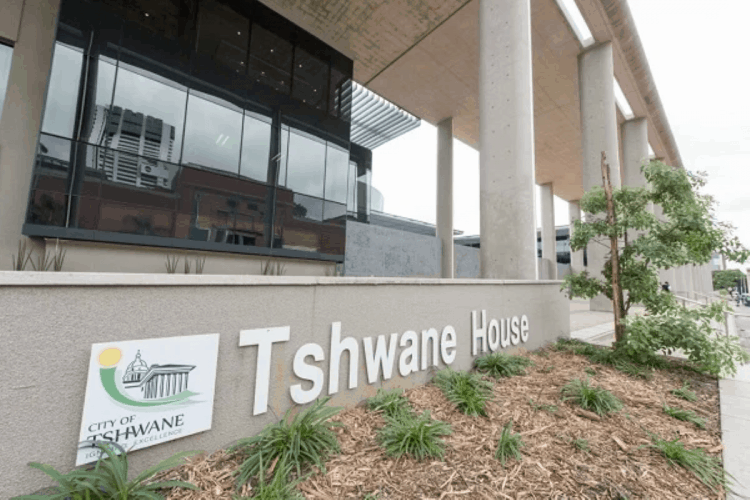
Property owners must settle qualifying municipal debts, including any interest lawfully charged, before a municipality can issue a clearance certificate for a transfer. The Supreme Court of Appeal (SCA) clarified the position in a case involving the City of Tshwane Metropolitan Municipality and property owner Tshiamo Tshepiso Moatshi.
The dispute centred on Section 118(1) of the Local Government Municipal Systems Act 32 of 2000. It bars the transfer of a property unless a municipal certificate confirms that specified debts incurred during the previous two years have been paid.
Dispute over a municipal clearance certificate
Moatshi bought a property in Tshwane in 2015 and later applied for a municipal clearance certificate. He disputed the amounts listed for water and electricity services, as well as property rates.
In 2018, he began proceedings to obtain an account from the municipality and challenge the charges. The parties could not agree on whether interest on unpaid municipal accounts should be included in the amount required for a clearance certificate.
The matter was heard as a stated case. The High Court in Pretoria was asked to decide whether Section 118(1)(b) allowed municipalities to include interest in the certificate.
The High Court, with Judge CJ Collis presiding, ruled that the legislation’s listed categories of municipal debt did not include interest. It said the certificate had to be issued once the specified municipal charges were paid, even if interest remained outstanding.
The City of Tshwane challenged that interpretation, arguing that “all amounts due” included interest lawfully charged on unpaid municipal amounts.
SCA rejects exclusion of interest
In a judgment delivered on 26 November 2026, the SCA upheld the municipality’s appeal and overturned the High Court’s order.
Judge A Schippers, with Judge KE Matojane and Judge E Baartman concurring, upheld the municipality’s appeal and found that Section 118(1) was broad in scope and did not apply only to the original municipal charges.
“The expression all amounts due is comprehensive. It is not confined to the principal amounts of the specified municipal charges,” Judge Schippers said.
The court also considered the wider legal framework for collecting municipal debt. This includes section 75A of the Systems Act, which expressly allows municipalities to recover collection charges and interest on unpaid amounts.
The court considered Sections 96 and 97 as well. These require municipalities to collect money owed to them and provide for interest on arrears where appropriate. The SCA found no basis in the wording or context of the law for excluding interest lawfully charged on unpaid municipal service fees, surcharges and property rates.
The court rejected the High Court’s view that the two-year limit was meant to protect prospective buyers from taking on historical municipal debt. It said Section 118(1) instead gives municipalities another way to secure payment of property-related debts and encourage timely payment.
Municipalities cannot demand unlawful interest
The SCA stressed that its interpretation does not give municipalities free rein to demand interest before issuing clearance certificates. A municipality must show that the interest was lawfully charged and became due on the specified municipal amounts within the two years set out in the legislation.
The court also clarified that the transfer restriction does not make a new property owner personally liable for a previous owner’s debts. The ruling applies only to municipal service fees, including water and electricity charges, surcharges on fees and property rates. It does not cover other municipal taxes, levies or duties.
The SCA replaced the High Court’s order with a declaration that amounts covered by section 118(1)(b) of the Systems Act include interest lawfully due on municipal service fees, surcharges on fees and property rates.
Moatshi was ordered to pay the costs of the stated case, including the fees of two counsel, one of whom was senior counsel. The trial was postponed indefinitely.
Get your news on the go. Click here to follow the Conviction WhatsApp channel.
