



- The play confronts more than gender-based violence; it interrogates class, race, and the illusion of inclusion.
- Tessa’s journey from outsider to legal insider reveals how systems uphold privilege and punish those who dare to belong.
- The story is especially resonant for South Africans navigating identity, aspiration, and the cost of acceptance.
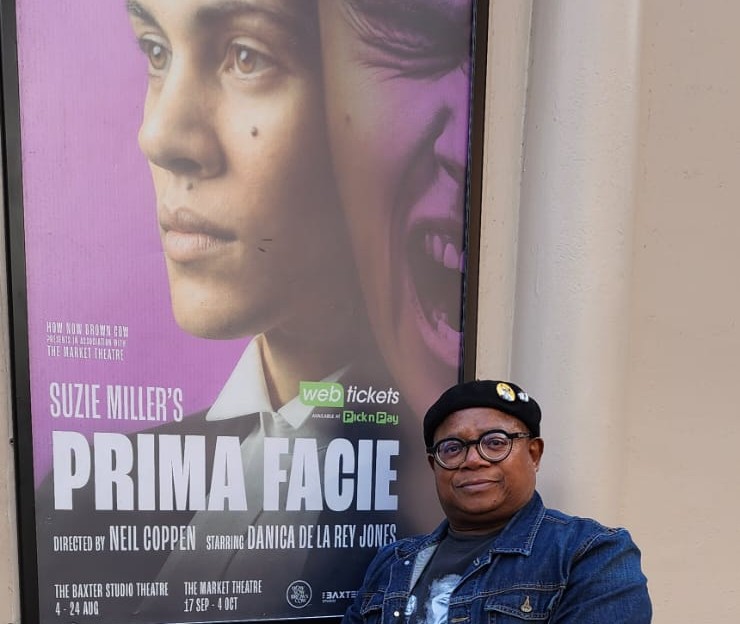
A 7pm performance. One woman. One chair. One table. No intermission. For 150 minutes, Danica De la Rey Joy is explosive, pure, raw energy. At the end, you feel as though you have been cross-examined for your whole life.
Suzzie Miller’s Prima Facie is being sold, rightly, as a play about gender-based violence. In South Africa, where a woman is killed every three hours and where rape is an epidemic we have normalised, it is impossible not to see it that way. The timing is urgent. The wound is fresh.
But to reduce Prima Facie to only a play about gender-based violence is to miss its deeper, more uncomfortable blade.
Class and race
For me, this play is about class and race, and what happens when a brilliant working-class girl thinks she can outwork the system that was built to keep her out. Her name is Tessa Ensler. She performs with ferocious intelligence and physicality that leaves you exhausted just watching her.
Tessa is not supposed to be here. She tells us this herself. She comes from a dysfunctional background, a loud house, a mother who struggled, a neighbourhood where no one went to a prestigious law school. She is not from the homes with libraries, Latin tutors, and family friends in Chambers.
She has worked twice as hard to qualify for admission to a prestigious law school. While others inherited the language of the law, she had to learn it like a second language. While others had the confidence of belonging, she had the hunger of the outsider.
She tells us how she learned to stand, to speak, to cross-examine, how she learned to win. And she does win. Spectacularly. To climb the ladder, Tessa becomes what she calls, without apology, a formidable legal vulture.
Complicity in the system
This is the central moral turn of the first half. She is a defence barrister who defends men accused of sexual assault, and she is brilliant at it. She knows how to pick apart a woman’s testimony, how to find the inconsistency, the gap, the drunken text, the skirt that was too short in the eyes of the jury. She knows how the law works, not justice, but the law.
The audience is complicit here. We applaud her. We laugh at her cleverness. We are in awe of her, a working-class girl beating the posh boys at their own game. This success sees her move deeper into elite circles.
She is now invited to the dinners, the wine bars, the Chambers parties where future judges and silks mingle. She has made it. She is no longer Tessa from the council estate. She is Tessa, brilliant, fearless, one of them. And then she gets involved with Julian.
The illusion of belonging
Julian is from a well-to-do background: handsome, charming, connected. He went to the right school and speaks with the ease of a man who has never been told no.
Much as the relationship shows potential, it is haunted by one unspoken fact. She does not quite belong to the elite club. She is tolerated, admired, desired, but not quite one of them. She is the exotic success story they clap for, not the daughter they marry. She feels it. We feel it, every time he introduces her, every time his friends laugh a little too loudly at her stories.
Then comes one great night of self-indulgence, with drinks, laughter, after-work euphoria. A night where she allows herself to be soft, to be a woman, not a barrister. Julian crosses the line. He feels entitled and thinks he can do as he wills with Tessa. He has been taught all his life that the world is his, that access is consent, that a woman’s “no” is just a negotiation.
She feels violated and senses that everything she worked for is being undermined. Julian feels entitled and refuses to take no for an answer.
The turning point when the victim becomes the advocate
It is here that the play pivots violently. This is why it is a masterpiece. Tessa, the woman who made a career discrediting victims, becomes a victim. She goes to the police. She enters the system she once wielded like a sword, and she learns, in the most brutal way, that the system she defended now turns against her.
Suddenly she is on the other side of the cross-examination. Suddenly her memory is “unreliable.” Her drinking is “relevant.” Her skirt, her flirting, her previous sexual history, her ambition – everything is used to paint her as a woman who asked for it. The same tricks she used in court are now used on her, word for word.
It is at this point that she realises that justice is not blind. It is about who you are and where you come from that protects you. Justice belongs to those with money and access to power. It is when she is allegedly raped that this brilliant young woman learns that the elite is not just a class; it is a network of people and families that protect and defend each other.
Julian does not need to be innocent. He needs to be connected. He has a barrister who sounds just like Tessa used to sound, and he has the benefit of the doubt that money and a good surname buy.
The limits of meritocracy
For me, the play makes it clear that you need more than excellent qualifications and professional success to confront the system.
As a person, especially a woman from a working-class background, you must tread carefully to avoid being lulled into complacency just because the upper class acknowledges your achievement. Their applause is not acceptance; their inclusion is not protection.
South African resonance
This is the race and class question that South Africans will feel in our bones. Tessa is white in the original text, but in our context she is every black child who went to a former Model C school, then to Wits or UCT Law, then to Sandton, then to a corporate law firm, who learned to speak like them, dress like them, defend their clients, and thought she had made it.
Until one night she realises the firm will never be hers. Until one case where she realises the law was not written for her mother. Tessa aspired to a middle-class life. Super success equals beating whiteness. She wanted security, respectability, a house where the police are not raiding, a life where work is in an office, not in a factory. That aspiration is not a crime. It is what millions of South African girls want. But Prima Facie asks, at what cost?
She became a victim of everything she worked towards. The very tools that lifted her, her sharp tongue, her legal mind, her ability to discredit women, become the tools that destroy her. The very elite that embraced her becomes the wall that blocks her justice.
No easy answers in the law
Miller does not give us a comfortable feminist revenge story. She gives us something far more honest. Tessa does not win in court. She learns that the law is inadequate for the truth of a woman’s body. The legal definition of consent, prima facie, on first appearance, cannot hold the reality of violation.
The final 20 minutes of the play are not theatre. They are testimony. Tessa, broken and alone, must decide whether to tell her story, not in court, but in plain language, to us.
If you have ever been a working-class person in an elite space, if you have ever been the first in your family to graduate, the only black person in the boardroom, the scholarship kid at the private school, you will know this play in your gut.
It is not just about men who rape. It is about systems that rape, systems that invite you in, use your brilliance, and then remind you that you were never really invited at all.
The final performance is Sunday, 11 October 2026. Go and see it. But do not go for entertainment. Go to be indicted.
Get your news on the go. Click here to follow the Conviction WhatsApp channel.
The opinions expressed in this article are solely those of the author and do not necessarily reflect the views of Conviction.co.za
