


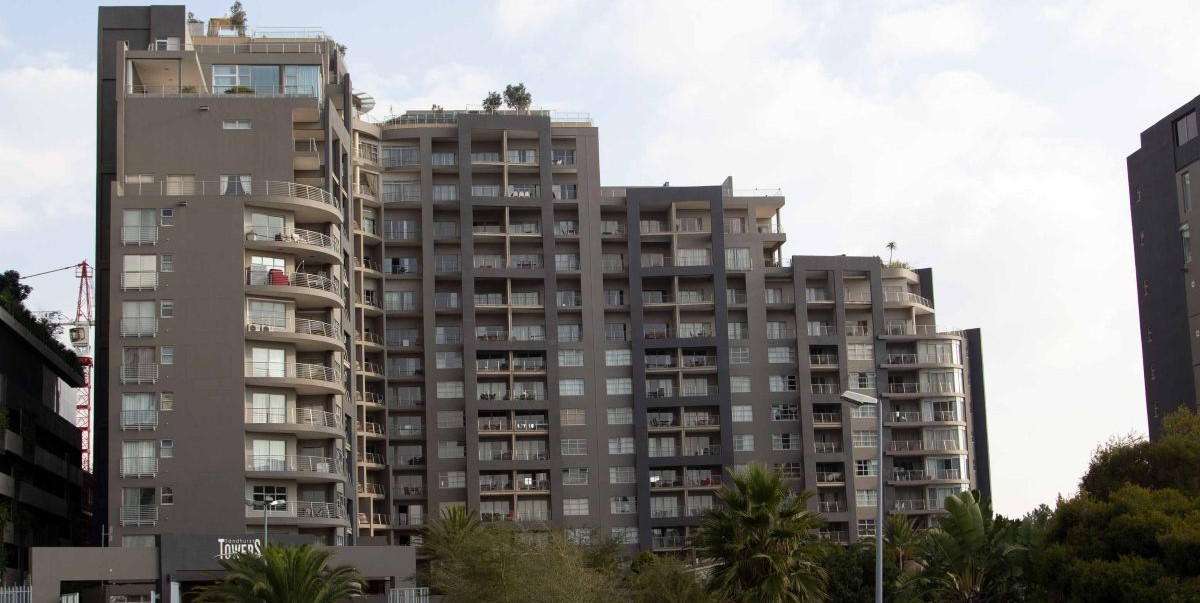
- The High Court found that a body corporate secured default judgment without revealing that the summons, received by its own building manager, may never have reached the property owner.
- Judge Ingrid Opperman set aside the R269,448 default judgment and a subsequent order authorising execution against the owner’s flat and additional property interests.
- The court ordered each party to pay its own costs, while confirming that a separate R408,172.35 judgment against the owner remains unaffected.
A body corporate’s failure to ensure that a summons reached a property owner, combined with the use of an incorrect application for execution against her flat, has led the High Court in Johannesburg to set aside two orders obtained against her.
Judge Ingrid Opperman ruled that these procedural defects were significant because the registrar and the judge who granted the original orders were not properly informed about the circumstances surrounding service and the scope of the relief sought.
In a judgment delivered on 8 October 2026, the court rescinded a default judgment for R269,448 granted on 15 August 2024, and a later order granted by Judge N Redman on 19 June 2025, which declared the owner’s residential flat at Sandhurst Towers and her share in the common property executable. The court also set aside any writs and execution steps taken under the June 2025 order.
Summons received by body corporate’s own manager
The applicant, Nomantungwa Angel Babhekile Mabaso, is the registered owner of a residential flat at Sandhurst Towers. Although the property was not her primary home, the scheme’s management rules designated it as her service address unless she notified the body corporate in writing of a change. The court found that no such notification had been proven.
On 24 July 2024, the sheriff recorded that the summons had been served at the flat on an adult identified as “Mr Adrian – Manager,” who appeared to be in charge of the premises during Mabaso’s temporary absence. This person was Adrian Padayachee, the body corporate’s building manager, rather than Mabaso’s tenant, relative or employee.
Mabaso said she never received the summons and so did not enter an appearance to defend the action. The registrar granted the body corporate default judgment for R269,448, plus interest and costs, on 15 August 2024.
The dispute before Judge Opperman was not about whether the underlying debt was owed. Mabaso did not contest the debt in her papers. Instead, she challenged the process by which judgment was obtained, arguing that the summons never reached her and that the later execution order went beyond the relief set out in the notice served on her.
The body corporate’s own evidence became central to the court’s assessment. Its procedure for a vacant unit was for security staff to keep legal documents until the owner collected them, or to attach them to the unit’s door if uncollected. The body corporate searched for the summons but could not find it, and accepted that it might never have come to Mabaso’s attention.
Judge Opperman said the matter could not be treated as a standard case where a properly served summons simply failed to reach the defendant. The document had been received by the creditor’s own manager, the unit was vacant, and the body corporate’s procedure for dealing with documents in those circumstances had not been shown to have been followed.
The judge held that the body corporate’s knowledge, obtained through its own employee who received the process, could not be ignored when seeking default judgment. The circumstances raised concerns that should have been disclosed to the registrar so that further service could be considered under Uniform Rule 4(10).
“Had those facts been disclosed, default judgment ought not to have been granted without further service,” Judge Opperman held. She concluded that the judgment had been erroneously sought and granted in Mabaso’s absence, bringing it within the scope of Uniform Rule 42(1)(a).
The judgment explained that a sheriff’s return of service is prima facie evidence of service, but it can be rebutted by additional facts showing that the particular delivery was ineffective. Although the flat remained Mabaso’s designated service address, the body corporate’s own evidence showed that the method used was not reasonably effective in ensuring that the summons reached her.
Execution order included relief not properly notified
The second order came from an application under Uniform Rule 46A, which deals with execution against residential property. On 27 March 2025, the body corporate obtained an order authorising substituted service of that application by email. The application was emailed to Mabaso on 7 and 8 April 2025.
The notice of set down and the application served on her sought execution to satisfy the R269,448 judgment. However, the version ultimately placed before the court, and the order granted by Redman AJ on 19 June 2025, included further relief relating to a separate judgment and exclusive-use parking areas.
The separate judgment, granted by Judge L Windell on 14 October 2024 under case number 2023-074973, was for R408,172.35. This was not the subject of Mabaso’s rescission application.
The body corporate admitted that the wrong Rule 46A application had been served. Although some parts of the supporting affidavit referred to the broader relief, Judge Opperman found that this did not fix the problem caused by a notice that told Mabaso about much narrower relief than what was ultimately granted by the court.
The judge stressed that the right to a hearing includes the right to fair notice of the case a party must meet and the relief that will be considered. Mabaso’s decision not to oppose the narrower application could not be taken as a decision to forgo opposition to much wider relief of which she had not been properly notified.
The body corporate alternatively asked the court to remove the additional monetary component and keep the rest of the execution order. Judge Opperman rejected this, explaining that a Rule 46A decision requires an integrated assessment of the property rights affected, the amount to be satisfied and the reserve price.
The rescission court could not reconstruct what order Judge Redman might have granted if the application had been properly served and presented. The entire 19 June 2025 order therefore had to be set aside, rather than amended to remove the extra parts.
Judge Opperman made clear that this did not invalidate or decide the separate R408,172.35 judgment. The body corporate still had the right to pursue any lawful remedies under an existing judgment, provided it followed the rules and gave proper notice.
Court orders each party to pay its own costs
The court also considered the body corporate’s late filing of its answering affidavit. Mabaso attributed the delay to her search for the summons and retrieving archived electronic records. Although her explanation was brief, Judge Opperman found no demonstrated prejudice from the delay and granted condonation.
The judge criticised Mabaso’s profane and dismissive email response to the execution application, as well as her delay in bringing the rescission application. However, neither her conduct nor the delay caused the underlying service failure or the use of the wrong Rule 46A papers.
The body corporate persisted in its opposition despite admitting that the summons might not have reached Mabaso and that the wrong execution application was served. The judge found shortcomings on both sides and declined to impose the usual costs consequences for rescission proceedings.
The final order rescinded the default judgment granted on 15 August 2024 and the execution order granted on 19 June 2025. It also set aside any writ issued and any execution steps taken under the latter order. Each party was ordered to pay its own costs for the rescission application, while costs related to condonation were left to be costs in the cause.
Get your news on the go. Click here to follow the Conviction WhatsApp channel.
