


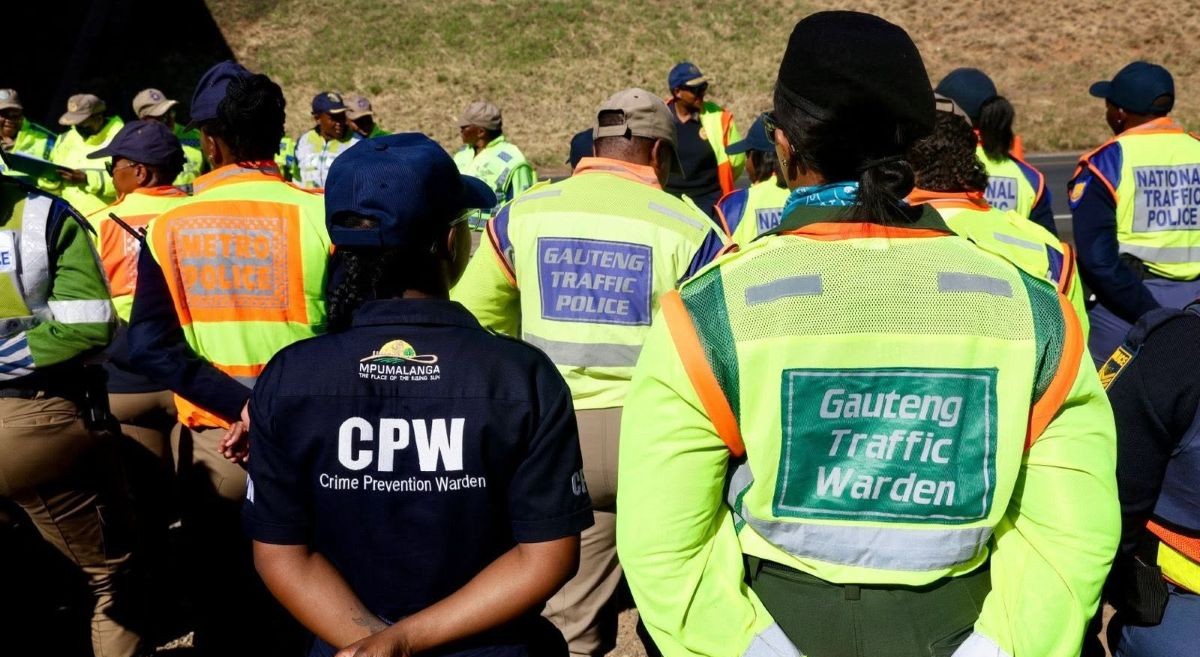
- Traffic wardens have been declared peace officers under section 334 of the Criminal Procedure Act.
- Their powers include conducting searches, making warrantless arrests in specified circumstances, executing arrest warrants and issuing written notices for certain road traffic offences.
- Employers must obtain a certificate of competency from the National Commissioner of the SAPS before issuing certificates of appointment to individual wardens.
Traffic wardens appointed under the National Road Traffic Act have been granted additional enforcement powers, including the authority to search and arrest motorists without a warrant in circumstances set out by law.
Justice and Constitutional Development Minister Mmamoloko Kubayi made the declaration under Section 334(1)(a) of the Criminal Procedure Act 51 of 1977.
Published in Government Gazette No. 55748 on 20 November 2026, Government Notice R.8188 declares traffic wardens appointed under Section 3A(1) of the National Road Traffic Act 93 of 1996 to be peace officers within the jurisdiction of the authority that appointed them.
The notice gives wardens specific powers to enforce provisions of the National Road Traffic Act and its regulations, subject to the stated conditions.
Powers include searches and warrantless arrests
Peace officer status allows traffic wardens to exercise specified powers under the Criminal Procedure Act when dealing with the offences listed in the declaration. These include conducting searches under Section 23(1)(a), arresting people without a warrant under Section 40(1)(a) and (j), and requiring people to provide their names and addresses under Section 41(1).
Wardens may also execute arrest warrants under Section 44 and issue written notices under sections 56 and 341 of the Criminal Procedure Act. These powers are limited to offences under sections 3J and 68 of the National Road Traffic Act and Regulations 35, 36, 212, 304, 305, 313, 316 and 322 of the National Road Traffic Regulations, 2000.
Their authority is also limited to the jurisdiction of the authority that appointed them. The declaration does not give traffic wardens general policing powers beyond the offences and areas specified in the notice.
SAPS competency certificate is compulsory
The declaration sets out requirements employers must meet before issuing certificates of appointment to traffic wardens. An employer may issue a certificate only after receiving a certificate of competency from the National Commissioner of the South African Police Service.
When deciding whether to issue a competency certificate, the National Commissioner must consider requirements relating to the individual traffic warden. These include checking previous criminal convictions through a SAP 69 report and obtaining a report confirming whether the individual has been declared unfit to possess a firearm under the Firearms Control Act 60 of 2000 or other relevant legislation. The individual must also provide a valid firearm competency certificate.
Training is also required. Traffic wardens must be trained in the offences they will enforce and the powers they will exercise. The training must take place at an approved Traffic Training Centre under the National Road Traffic Act and follow a curriculum approved by the Road Traffic Management Corporation.
A report from the Road Traffic Management Corporation must confirm that the individual has completed the required training.
Appointment certificates must contain specific information
The notice also sets out what must be included in a traffic warden’s certificate of appointment. The certificate must state the appointee’s full name and identity number, include their signature and photograph, and describe the capacity in which they were appointed.
It must also identify the employer responsible for the appointment and include the employer’s or responsible person’s signature and official stamp. These requirements establish what documentation must be in place before wardens exercise their newly declared peace officer powers.
Previous declaration withdrawn
Government Notice R.8188 also withdraws Government Notice R.7063 of 30 January 2026, replacing the earlier declaration relating to traffic wardens. The new requirements affect municipalities and other authorities responsible for appointing traffic wardens, which must ensure the necessary competency and appointment certificates are in place.
The limits on wardens’ authority are also important for motorists and legal practitioners. Wardens’ powers remain confined to the specified road traffic offences, the powers listed in the notice and the jurisdiction of the appointing authority.
Get your news on the go. Click here to follow the Conviction WhatsApp channel.
