


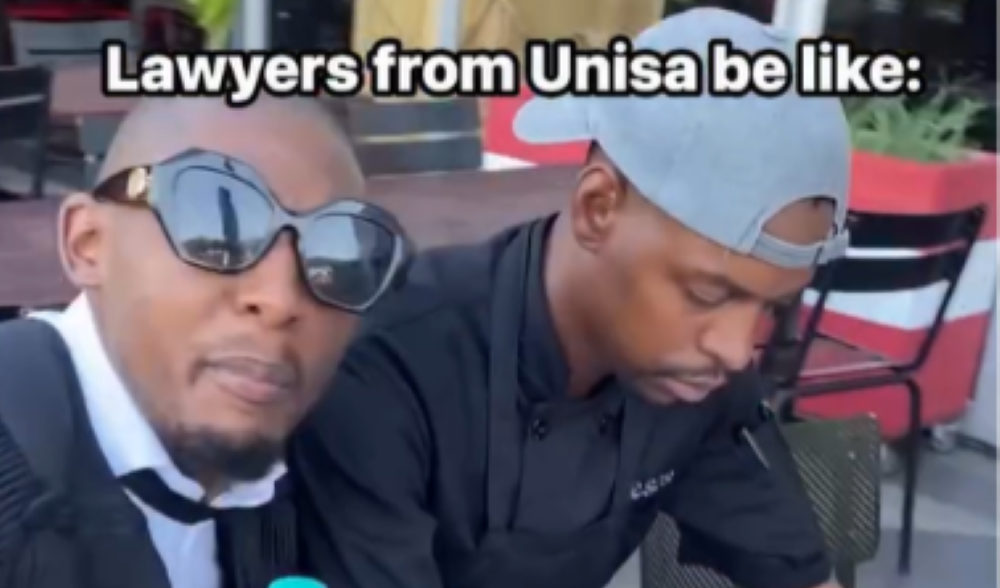
- UNISA went to the High Court in Pretoria, seeking urgent relief against videos titled “Lawyers from Unisa be like”, posted by Dr Che Lenyehelo.
- Judge Mbongwe found that repeatedly mentioning UNISA in these videos could leave viewers with the impression that the university’s law graduates lack competence, reliability, and professional standing.
- The court ordered that the identified videos be removed within 24 hours and banned the posting of similar content until the rest of the case is decided.
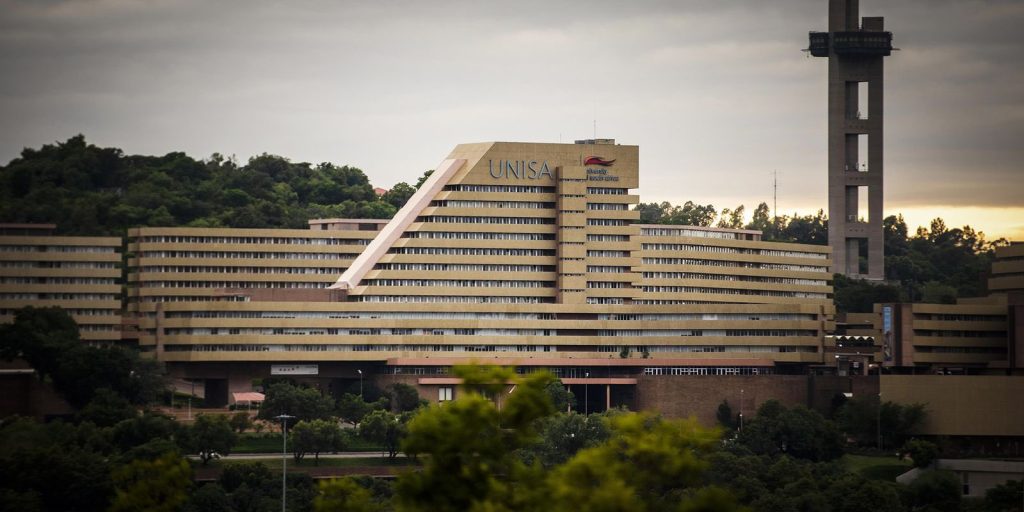
The University of South Africa (UNISA) has secured an interim interdict against Dr Che Lenyehelo, preventing him from posting social media videos that allegedly link lawyers educated at UNISA with being professionally incompetent, dishonest, or untrustworthy.
In a judgment delivered on 11 November 2026, the High Court in Pretoria ruled that although satire, parody, and comedy are protected by the Constitution, that protection does not automatically rule out defamation.
Judge MPN Mbongwe said that repeatedly linking UNISA with the incompetence shown in the videos creates a direct association that justifies interim protection of the university’s reputation.
Lenyehelo is a social media content creator with more than 400 000 followers on Facebook, who published a series of videos titled “Lawyers from Unisa be like”, among others. On TikTok, the account has 812K followers and 20.7M likes, and has a large following on YouTube.
In opposing the application, he argued that the videos were intended as satire, parody, comedy and social commentary, rather than factual statements about the quality of UNISA’s legal education or its graduates. He also told the court that the restrictions sought by the university could affect his ability to earn a living through content creation.
UNISA challenges social media publications
The urgent application arose from a series of videos posted by Lenyehelo on several social media platforms under the title “Lawyers from Unisa be like”. UNISA argued that these videos made its law graduates look incompetent, ignorant, dishonest, unreliable, and unworthy of public trust. The university said this damaged its reputation, as well as that of its Faculty of Law and its graduates.
Lenyehelo opposed the application. He argued that the videos are satire, parody, comedy, and social commentary, all of which are protected by the constitutional right to freedom of expression. He insisted that no reasonable viewer would take the videos as factual claims about the quality of UNISA’s legal education and disputed the urgency of the proceedings and the university’s right to interim relief.
University entitled to protect its reputation
Lenyehelo questioned whether UNISA, as a public university, had the legal right to seek protection under defamation law. He argued against the institution’s right to claim protection for its reputation, which led the court to consider whether a public university can have a reputation that the law will protect.
UNISA relied, among other cases, on the 2026 decision in Nelson Mandela University v Mashalaba. Judge Mbongwe agreed that a university’s reputation is one of its most valuable assets, since public confidence in its academic programmes, qualifications, and graduates directly affects student enrolment, professional standing, donor support, academic partnerships, and public trust.
The judge stressed that while public institutions are open to criticism and scrutiny, they are not deprived of legal remedies if their reputation is unlawfully attacked. The court was satisfied that UNISA had the legal standing to seek this kind of relief.
Continued publication justified urgency
Lenyehelo argued that the case was not urgent and that any urgency cited by UNISA was self-created. UNISA responded that the videos were still live on social media, continued to attract daily viewers, and were causing ongoing reputational harm.
Judge Mbongwe agreed that social media creates a unique challenge because, unlike traditional publications, content can stay online indefinitely, be seen by new audiences, and be shared repeatedly. The judge found that every new view strengthened the connection in people’s minds between UNISA and the incompetence shown in the videos, and that ongoing circulation kept the alleged harm going.
The court saw this as different from a completed publication in the past, finding that the risk came from content that was still accessible to the public. Judge Mbongwe said that waiting for the usual process could leave the university without an effective remedy and that the matter needed urgent attention.
Repeated references to UNISA central to defamatory meaning
The court used an objective test for defamation, looking at whether a reasonable viewer, considering the videos as a whole and in context, would see them as lowering the university’s standing in the eyes of reasonable members of society.
In considering this, Judge Mbongwe referred to the Constitutional Court decision in Le Roux and Others v Dey, which says that the meaning of a publication must be determined in context, from the perspective of a reasonable observer.
Lenyehelo maintained that the videos were intended as comedy and satire, not as factual statements about UNISA or its graduates. The judge acknowledged that humour is part of the context but said the repeated and obvious references to the university could not be ignored.
The judgment distinguished between a video showing an incompetent fictional lawyer and one that repeatedly identifies the character as a lawyer from UNISA. Judge Mbongwe found that a reasonable viewer could see the videos as suggesting that lawyers trained by the institution are generally incompetent, unreliable, or unworthy of trust, not merely that one fictional character is incompetent.
The judge said that the court’s concern was not the satirical nature of the videos, since satire is strongly protected by the Constitution. The issue was the repeated linking of incompetence to lawyers from a specifically named institution. The court noted that humour and defamation are not mutually exclusive: ridicule can sometimes be defamatory.
The court was satisfied that the videos could reasonably be taken as defamatory towards UNISA and the quality of its legal education. It clarified that the university was not trying to ban criticism of universities, criticism of itself, or satire in general, but was objecting to videos that allegedly portray its law graduates as incompetent and untrustworthy.
Freedom of expression weighed against institutional reputation
Section 16 of the Constitution guarantees freedom of expression and protects robust debate, criticism, artistic expression, satire, and parody. Judge Mbongwe said that Lenyehelo’s reliance on these protections was not misplaced or unimportant, but stressed that freedom of expression is not absolute and must be balanced with dignity and reputation.
The court therefore had to balance the competing interests, rather than simply decide in favour of either freedom of expression or institutional reputation. This balance was key to deciding whether UNISA was entitled to interim relief.
Four requirements for interim interdict established
The court considered the established requirements for interim relief, which are showing a prima facie right even if it is open to some doubt, a reasonable fear of irreparable harm, no adequate alternative remedy, and a balance of convenience that favours the relief. Judge Mbongwe referred to the principles in Webster v Mitchell.
On the prima facie right, the judge found that UNISA had shown an interest that needed protection, as the videos could be seen as defamatory towards the institution and its law graduates. The repeated link between the university and the allegedly incompetent lawyers formed the basis for this finding.
On irreparable harm, the court accepted that reputational damage is hard to measure and that ongoing circulation on social media poses a special risk of repeated and accumulating injury. Judge Mbongwe found that every new viewing could renew the alleged harm to UNISA’s reputation.
The court also found that a damages claim would not solve the problem while the videos were still available and being shared. Damages would not provide an adequate remedy in the face of ongoing reputational harm.
Content creator’s livelihood considered
When considering the balance of convenience, the court took into account Lenyehelo’s argument that UNISA’s proposed restrictions would interfere with his ability to earn a living as a content creator. Judge Mbongwe agreed that creating content is a legitimate way to earn income and that publication restrictions could have financial effects.
However, the judge found that these factors did not outweigh UNISA’s right to protect its reputation. The order would not stop Lenyehelo from making satirical content, engaging in social commentary, exercising his freedom of expression, or generally pursuing his work, but it would prevent him from posting videos that specifically identify UNISA and connect its graduates to incompetence, dishonesty, or untrustworthiness.
The court clarified that Lenyehelo could continue creating content using the same comedic style, themes, and characters, as long as he did not use UNISA’s name to deliver the allegedly defamatory message. Judge Mbongwe also rejected the idea that any commercial benefit from the videos entitled Lenyehelo to keep distributing material that appeared, at least on the face of it, to violate another party’s rights.
The judge concluded that the harm UNISA would suffer from continued publication outweighed the harm claimed by Lenyehelo. The balance of convenience therefore favoured granting interim relief.
Disputes of fact did not prevent relief
Lenyehelo also argued that factual disputes meant the court should not decide the case on paper alone. Judge Mbongwe referred to the principles in Plascon-Evans Paints Ltd v Van Riebeeck Paints (Pty) Ltd, explaining that not every disagreement between parties is a genuine factual dispute requiring a trial.
The judge found that the key issue was the meaning the videos conveyed and the legal consequences, which could be decided on the written evidence. Any disputes did not prevent the court from granting interim relief.
Costs and interim order
On the issue of costs, Judge Mbongwe acknowledged that the case raised important constitutional questions about freedom of expression. However, he found that the litigation became necessary only after Lenyehelo refused to remove the videos following a demand from UNISA. The court saw no reason to depart from the usual rule that the losing party pays costs.
The High Court granted the application as an urgent matter, setting aside some of the usual procedural requirements. Pending the outcome of Part B of the case, Lenyehelo was barred from publishing, republishing, or distributing the videos named in UNISA’s original papers as the “Lawyers from Unisa be like” publications.
He was ordered to remove the identified videos from all social media platforms he controls within 24 hours of being served with the order. The court also banned him from posting any similar content that links professional incompetence, dishonesty, or untrustworthiness to legal practitioners because they studied at UNISA, until Part B is decided.
Lenyehelo was ordered to pay the costs of Part A of the application, including the costs of two counsel where used. The remaining relief sought by UNISA under Part B was postponed for a later date.
The order is interim and does not represent a final decision on the alleged defamation, which will be dealt with in the next phase of the proceedings.
Get your news on the go. Click here to follow the Conviction WhatsApp channel.
