
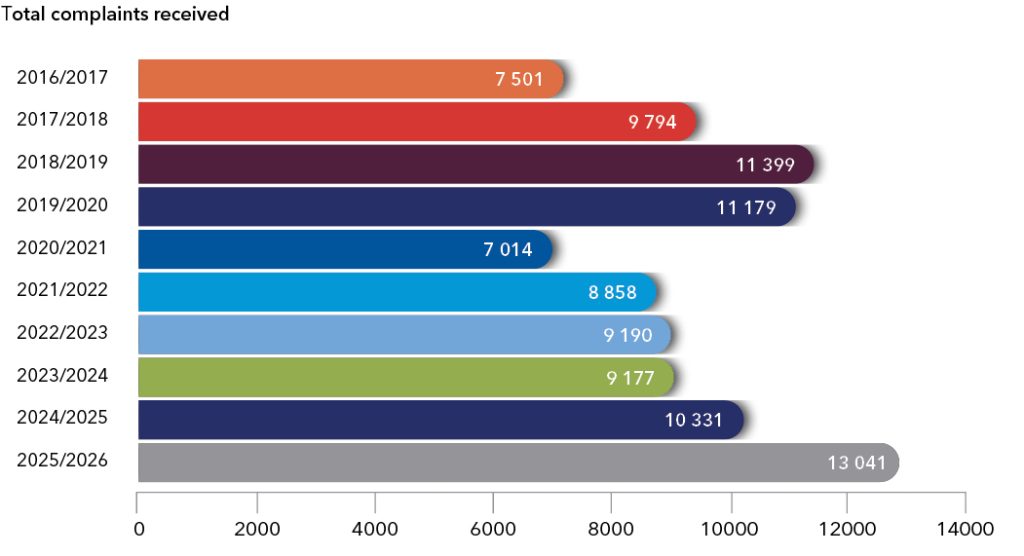
- Pension fund complaints rose by 26 percent to a record 13 041 in the past financial year.
- Unpaid employer contributions accounted for 61.48 percent of complaints investigated and closed. Often, members only discover the missing payments when they try to claim their benefits.
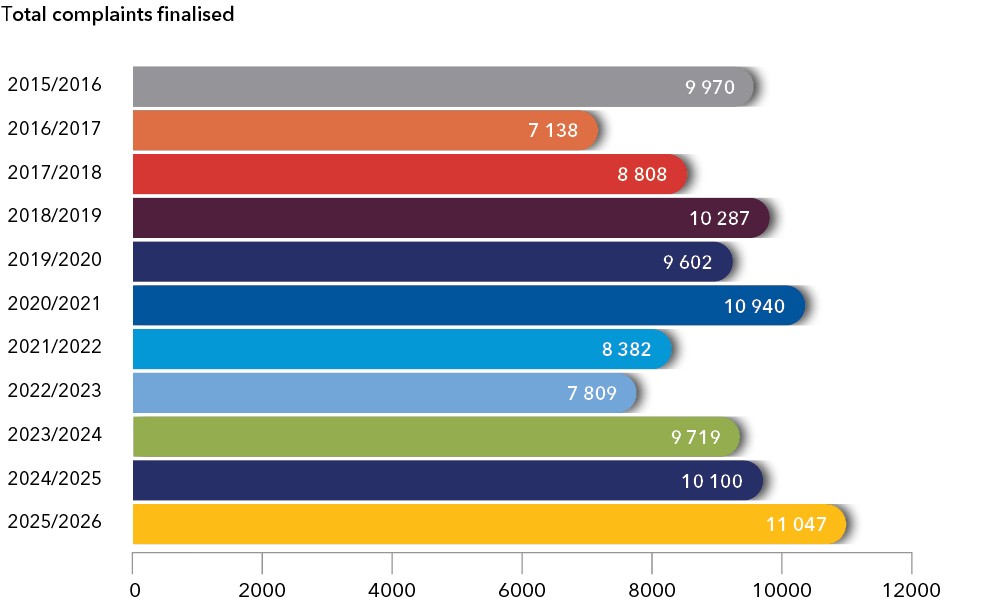
- The adjudicator completed 11 047 complaints, with 91 percent of cases resolved within six months.
Employers’ failure to pay retirement fund contributions deducted from workers’ salaries remained the biggest source of pension fund complaints, accounting for 61.48% of complaints investigated and closed by the Office of the Pension Funds Adjudicator (OPFA) during the past financial year.
The office received 13 041 complaints in the year under review, a 26% increase from the 10 331 recorded in the previous financial year. The total is the highest in the OPFA’s 28-year history and 39% above its 10-year average of 9 411 complaints.
Presenting his first annual report, Pension Funds Adjudicator Lebogang Mogashoa said the rising caseload highlighted the office’s role in resolving disputes in the retirement funds industry. Mogashoa took over the position in December 2025 from Muvhango Lukhaimane, who served for 12 years.
Withdrawal benefit disputes add to complaints
Withdrawal benefits made up 22.93 percent of complaints investigated and closed. Combined, unpaid contributions and withdrawal benefit disputes accounted for about 84 percent of these cases. The two issues frequently overlap because a member may only become aware of missing contributions when applying to access retirement savings.
The Private Security Sector Provident Fund was implicated in 75.60% of all complaints received. The Contract Cleaning National Provident Fund accounted for 3.78%, followed by the Transport Sector Retirement Fund at 3.23%, Alexander Forbes Retirement Fund at 2.66% and Sanlam Umbrella Provident Fund at 1.94%.
Mogashoa attributed the increase in complaints partly to greater public awareness, publicity surrounding unclaimed benefits and persistent service delivery problems within the industry.
The implementation of the two-pot retirement system in September 2024 also exposed governance, administrative and operational challenges, contributing to the increased demand for dispute resolution.
Section 13A non-compliance remains a concern
Mogashoa identified continued non-compliance with Section 13A of the Pension Funds Act as a significant concern. The provision deals with employers’ obligations relating to pension fund contributions, including the payment of contributions deducted from employees’ remuneration.
He said the failure to pay these contributions undermined confidence in the retirement fund system and compromised the social protection objectives that retirement savings are intended to serve.
The Financial Services Tribunal received 104 applications for reconsideration of OPFA determinations during the reporting period. Of these, 63 were dismissed, upholding the adjudicator’s decisions in those matters.
Mogashoa said the growing demand for the office’s services placed pressure on operational capacity and made improvements to case management, internal processes and digital systems increasingly important.
“It also highlights the need for improved responsiveness across the retirement funds industry, particularly about the timely submission of information and effective participation in the adjudication process,” he said.
Adjudicator finalises record number of complaints
Despite the increase in complaints, the OPFA investigated and finalised 11 047 matters during the year, the highest number completed in a single reporting period since the office was established in January 1998. The office finalised 91% of cases within six months.
Digital channels, including email and the OPFA website, accounted for approximately 70% of complaints received. Walk-in services remained significant, accounting for 27% of complaints, highlighting the need to maintain accessible services for people who face barriers to digital access.
Gauteng contributed 45.6% of complaints, the largest share nationally, while the Northern Cape accounted for 2.5%.
Two-pot system could bring further disputes
The OPFA plans to strengthen its adjudication function and use complaint data to identify recurring problems, inform policy development and encourage improved conduct across the retirement funds industry.
Mogashoa said staff training on the two-pot retirement system was continuing. One potential challenge is that members may seek access to their retirement component before reaching retirement age, which current legislation prohibits.
National Treasury has indicated that Phase 2 of the system may explore conditional access to the retirement component for retrenched members who have no other source of income.
Mogashoa said retirement funds must continue explaining the tax consequences of withdrawals from the savings component and the preservation requirements applicable to the retirement component.
“It remains essential for retirement funds to continue communicating the implications of withdrawing from the savings component, tax consequences and preservation requirements of the retirement component to ensure that members are fully informed and able to make responsible financial decisions,” he said.
Get your news on the go. Click here to follow the Conviction WhatsApp channel.